


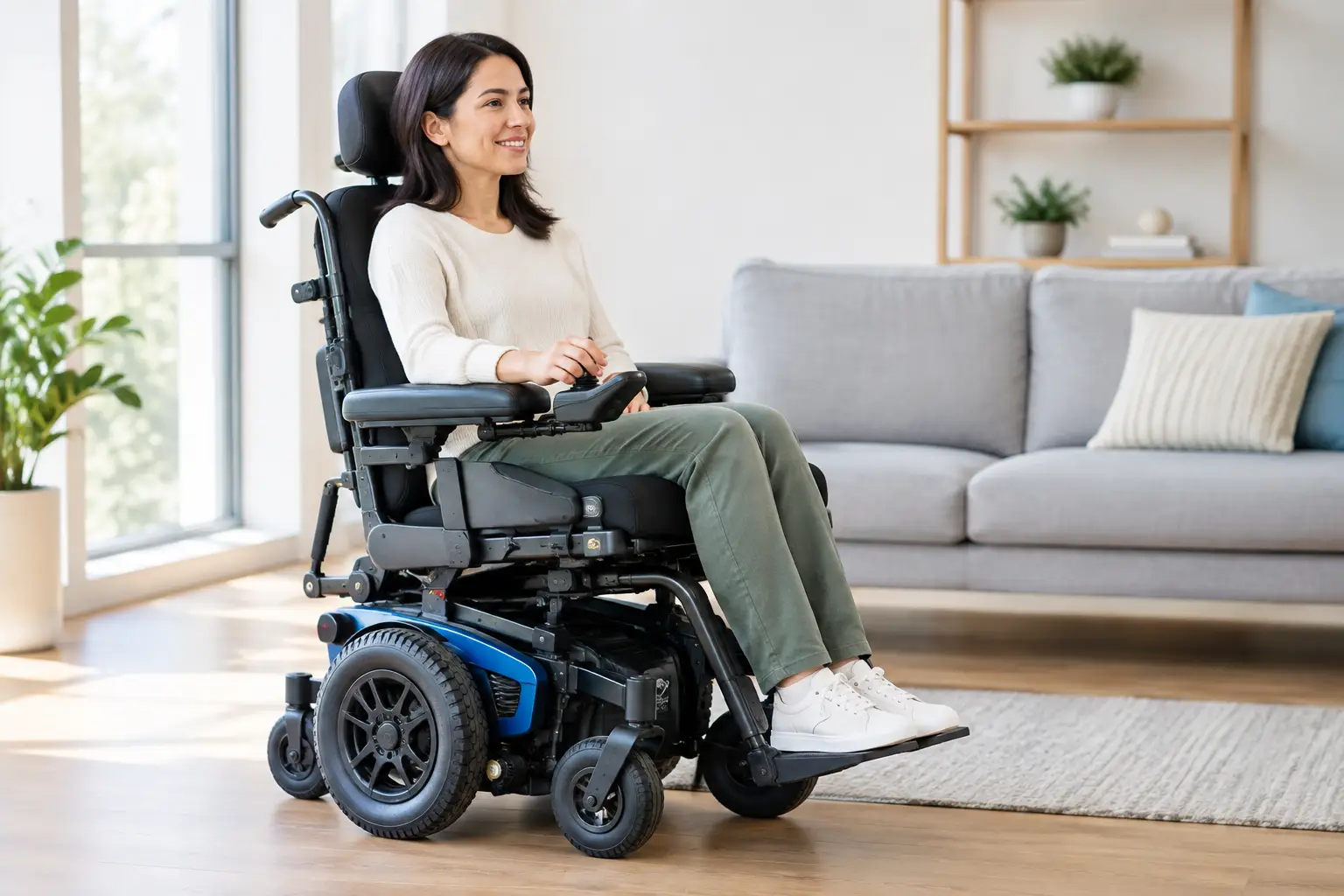
Powerchair Seating Guide for Everyday Comfort
A powerchair can make a real difference to how comfortably and confidently someone moves through the day. But the chair’s driving range, turning circle and outdoor ability are only part of the decision. This powerchair seating guide focuses on the part you will use every minute: the seat, backrest, cushions, supports and adjustments that help make everyday independence feel achievable.
A seat that looks comfortable in a photograph is not necessarily right for the person using it. Good seating is about fit, support and how the chair works in real life – at the kitchen table, while watching television, travelling to appointments or spending an afternoon out with family.
Start with the person, not the chair
The right seating arrangement depends on the user’s height, weight, posture, mobility and the amount of time they expect to remain in their powerchair. Someone who uses a chair for short journeys around the home may need a different level of support from someone who sits in it for several hours a day.
Think about the user’s usual sitting position. Do they tend to lean to one side? Do they find it hard to keep their feet supported? Is transferring from a bed, sofa or toilet difficult? Are there existing concerns about pressure sores, pain, swelling or fatigue? These questions are often more useful than simply choosing the widest or most heavily padded seat.
For a first-time buyer, a standard, well-padded captain’s seat with adjustable armrests may be enough. For a person with more complex postural needs, a more configurable seating system may be safer and more comfortable. Where there is a history of pressure damage, changing posture, significant weakness or difficulty maintaining balance, seek advice from an occupational therapist, physiotherapist or other qualified seating professional before buying.
Getting the seat size right
A correctly sized seat gives the user room to move without allowing them to slide, twist or slump. Too narrow can cause rubbing and pressure at the hips. Too wide can make it harder to sit centrally, use the armrests or reach the controls comfortably.
Seat width and depth
Seat width is usually measured between the armrests. There should be a small amount of space at each side of the hips, rather than a tight squeeze or a large gap. Remember to allow for winter clothing, but avoid choosing an oversized chair just for a bulky coat.
Seat depth matters just as much. The back should support the user fully, while leaving a small gap between the front edge of the cushion and the back of the knees. A seat that is too deep can press behind the knees and encourage slouching. One that is too shallow may leave the thighs unsupported, placing more pressure on the bottom.
If the user can try a similar model, sit in it for longer than a few minutes. A quick test may not reveal whether the cushion feels supportive after an hour. Carers should also check whether the user is sitting straight and whether both feet rest securely on the footplate.
Seat height and transfers
Seat height affects comfort, table access and transfers. A chair that sits too low can make standing transfers harder, while a high seat may leave the feet unsupported or make it awkward to fit beneath a dining table.
If the user transfers using a transfer board, a hoist or assistance from a carer, consider the space around the chair and whether the armrests can move out of the way. Flip-up armrests can be particularly useful for side transfers, provided the chair remains suitable for the person’s needs and transfer method.
Backrests, headrests and posture support
The backrest should support the natural shape of the back without forcing the user into an uncomfortable position. Many everyday powerchairs have a padded, reclining captain’s seat. This can be a practical choice for users who value a familiar, armchair-style feel and want to adjust their position during longer journeys.
Reclining can improve comfort, but it is not a cure for poor fit. When a backrest reclines, some users may slide forward in the seat, which can increase pressure and make driving controls harder to reach. A tilt-in-space function, available on some specialist chairs, changes the seating angle while helping maintain the hip position. It may be worth considering for people who need regular changes of posture, although these chairs can be larger, heavier and less convenient for car transport.
A headrest is useful when the user needs support for the head and neck, particularly on uneven ground or during recline. It should sit at the right height and should not push the head forward. Lateral supports, pelvic belts and shaped backrests can also help some people maintain a safer central position, but these are best selected with professional guidance rather than added as a simple accessory.
Choosing a cushion for comfort and pressure care
The cushion is one of the most significant seating choices. Standard foam cushions are common, comfortable and suitable for many users who spend limited or moderate periods in a powerchair. However, not all foam is equal. A supportive cushion should spread weight evenly and resist flattening over time.
People at greater risk of pressure ulcers may need a specialist pressure-relieving cushion. Options can include contoured foam, gel, air-cell or hybrid cushions. Each has trade-offs. Air cushions can provide excellent pressure management but may need regular inflation checks. Gel can feel stable and comfortable but may add weight. Contoured foam can help support pelvic position, yet it must match the individual’s shape and posture.
Avoid adding a soft household cushion simply to make the seat feel plusher. It can raise the user too high, affect joystick reach, reduce stability and make transfers less predictable. If a cushion is added, recheck the footplate height, armrest position and access to the controls.
Check the skin, not just the seat
Redness that does not fade, soreness, heat, broken skin or new discomfort should be taken seriously. Regular position changes and pressure relief are often needed alongside the right cushion. A powerchair cannot replace an individual pressure-care plan, especially for someone with reduced sensation or a previous pressure ulcer.
Armrests, footplates and joystick position
Small adjustments can have a surprisingly large impact on comfort. Armrests should support the forearms without raising the shoulders or preventing the user from getting close to a table. Adjustable-height armrests can help if the user’s posture changes between indoor tasks and longer outdoor trips.
The footplates need to support both feet evenly. Feet that dangle can increase pressure under the thighs and make the user feel unstable. Footplates that are too high may push the knees up and alter pelvic position. Swing-away or flip-up footplates can make transfers easier, but they should always be moved safely before standing or transferring.
The joystick should be easy to reach without leaning forwards or stretching across the body. The user should be able to rest their arm comfortably while operating it. If hand strength, coordination or sensation is limited, alternative controls or joystick positioning may be available on suitable models.
Think about where the powerchair will be used
Seating needs are closely tied to the chair’s daily environment. A compact indoor powerchair may suit narrow doorways and close furniture, but it may offer fewer seating adjustments than a larger pavement or outdoor model. A chair with suspension and a more supportive seat can make longer trips more comfortable, yet it may be harder to lift into a vehicle or store at home.
For car travel, check whether the seat folds, removes or stays attached, and consider the total lifting weight. For use at home, measure doorways, turning areas, table heights and the space beside the bed. If the chair will be used outdoors, think about weather protection, uneven pavements and how long the user is likely to be seated before returning home.
At Mobility Scooters UK Ltd, practical questions like these help narrow down the choice between compact, transport-friendly powerchairs and more supportive models designed for longer daily use.
Reassess the fit over time
Seating is not a one-off decision. Weight changes, a change in health, reduced stamina or a new care routine can all affect how a powerchair feels and performs. Check the cushion for flattening, make sure bolts and armrests remain secure, and look for changes in posture such as leaning, sliding or one foot losing contact with the footplate.
The best powerchair seating is rarely the most complicated option. It is the arrangement that gives the user steady support, comfortable access to their controls and the confidence to stay involved in ordinary life. Taking time to get that fit right can make every journey, from the living room to the local shops, feel more comfortable and more manageable.