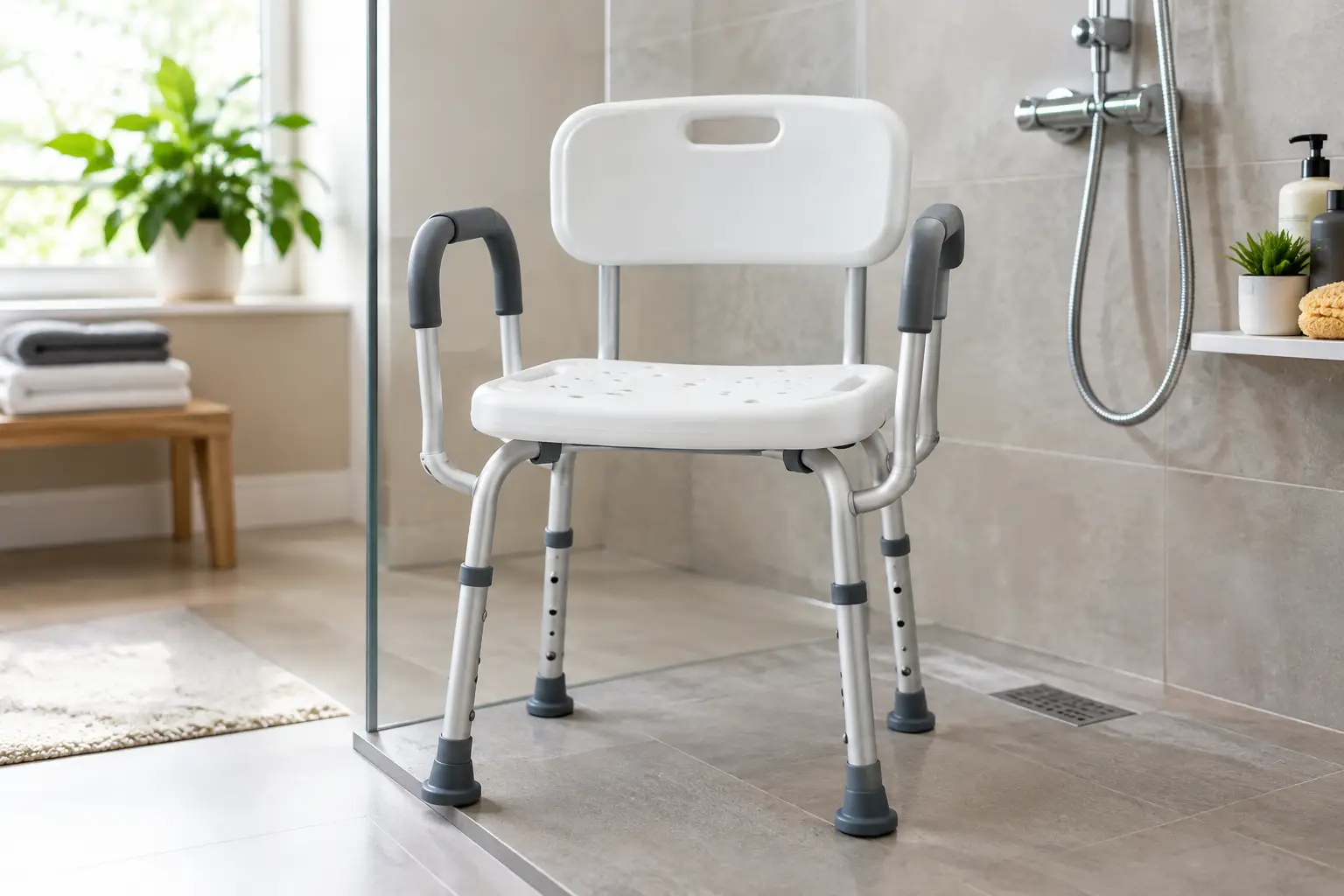
Top Portable Shower Chairs for Safer Bathing
A shower can become tiring or worrying when standing is difficult, balance is unreliable or a recent illness has reduced confidence. The right top portable shower chairs give you a stable place to sit while washing, helping make daily personal care safer, more comfortable and less dependent on help from someone else.
Portable does not have to mean flimsy. A well-chosen shower chair can be light enough to move between rooms or take on a trip, while still offering the reassuring support needed in a wet bathroom. The best choice depends less on finding one product labelled ‘best’ and more on matching the chair to the user, the shower space and the way they transfer in and out.
What makes a portable shower chair a good choice?
A portable shower chair is designed to be moved when needed rather than permanently fixed to the bathroom. Many have lightweight aluminium frames, drainage holes in the seat and non-slip feet that help them remain steady on a level shower floor. Some are height-adjustable, while others add armrests, a backrest or a padded seat for extra comfort.
This flexibility can be particularly useful for people who rent, share a bathroom, stay with family or travel between homes. It can also be a sensible option after an operation or during recovery, when temporary support may make washing easier without changing the whole bathroom.
However, portability has a trade-off. A very basic stool may be easy to lift and store, but it will not give the same side or back support as a full shower chair. A chair with a back and arms can feel much more secure, though it may take up more space and be less convenient to carry. The right balance is the one that makes everyday washing feel manageable and safe.
Types of top portable shower chairs to consider
Shower stools for compact spaces
A shower stool is the simplest portable seating option. Usually backless and armless, it is a practical choice for a small cubicle where there is limited room to turn or where the user can sit down and stand up with reasonable control.
Look for a wide, stable base and adjustable legs if the shower tray is uneven or if a comfortable sitting height is needed. A stool is often the easiest option to store in a cupboard or move out of the way, but it offers little support when reaching for shampoo, washing lower legs or turning around.
Shower chairs with backrests
A backrest can make a meaningful difference for anyone who becomes fatigued quickly, has reduced core strength or simply feels less confident sitting unsupported. It gives the user a steady point of contact while washing and can make a longer shower feel more restful.
For a chair to remain genuinely portable, check both its overall weight and its shape. Some frames are light but awkward to carry because the arms and backrest make them bulky. If it needs to be moved by a carer, a manageable frame is just as relevant as the chair’s maximum user weight.
Chairs with armrests for easier transfers
Armrests are valuable when sitting down and rising again is the hardest part of showering. They offer something firm to push from and can provide extra reassurance during a sideways transfer from a wheelchair or when stepping backwards towards the chair.
They are not ideal in every bathroom. Fixed armrests may prevent the chair fitting neatly under a shower screen or may make a close transfer more difficult in a narrow space. If a user transfers from one side, consider whether removable or swing-up arms would give them clearer access.
Folding portable shower chairs
Folding models are useful where storage is a priority or when equipment needs to travel in the boot of a car. They can suit holidays, visits to relatives and bathrooms used by more than one person.
Before choosing one, check how it locks open. The folding mechanism should feel secure and easy to operate without requiring a strong grip or complicated hand movements. Also consider whether the folded chair can be carried comfortably and whether it will fit in the vehicle alongside other mobility equipment.
Shower and commode chairs
For users who need greater support or who find the journey between bedroom, toilet and shower difficult, a shower commode chair may be more appropriate than a standard portable shower chair. These are designed to support washing and toileting needs, with some models suitable for use over a toilet or with a commode pan.
They are generally larger and more specialised, but can reduce the number of transfers needed during personal care. Where a person needs help from a carer, has very limited mobility or uses a wheelchair full-time, this type of chair can be worth considering carefully.
Measure the bathroom before buying
The most supportive chair will not help if it does not fit safely inside the shower. Measure the narrowest point of the entrance, the internal width and depth of the shower area, and the available turning space outside it. Do not rely only on the dimensions of the shower tray, as shower screens, rails and doors can reduce usable room.
Seat height matters too. When seated, the user’s feet should rest flat on the floor or shower base where possible, with knees at a comfortable angle. A chair that is too low can make standing difficult; one that is too high may leave feet dangling and reduce stability. Height-adjustable legs are useful where more than one person may use the chair or when the bathroom floor is not perfectly level.
Check the chair’s maximum user weight, including any need to lean heavily on armrests during transfers. It is wise to choose equipment with an appropriate margin rather than selecting the minimum stated capacity. Bariatric shower seating is available for people who need a wider seat and higher weight allowance.
Safety features that are worth prioritising
In a wet environment, the small details matter. Non-slip ferrules or rubber feet should sit fully on the shower floor without rocking. Drainage holes in the seat help prevent water pooling beneath the user, while a textured surface may improve grip when wet.
A backrest and armrests can add confidence, but they should never be used as a substitute for correct positioning. Place the chair on a firm, level surface, not on a loose bath mat or an uneven shower base. Make sure all adjustable legs are set to the same height and are properly locked before use.
If there is a noticeable risk of slipping while entering the shower, a grab rail, non-slip flooring or assistance from a carer may also be needed. A portable chair is one part of a safer setup, not a complete answer to every transfer difficulty.
Choosing for independent use or carer support
People often focus on the person sitting in the chair, but it is also worth considering how washing will happen. Someone bathing independently may need armrests, an easy-to-reach shower control and room to keep toiletries within reach. A shower basket or organiser positioned at a safe height can reduce unnecessary stretching and twisting.
Where a family member or paid carer provides support, there needs to be enough space to stand safely beside the user. A chair that fills the whole cubicle can leave no room to assist with washing or transfers. In these cases, an open-sided chair, wheeled shower commode or a different bathroom arrangement may be more suitable.
For someone returning home after a hospital stay, needs can change quickly. It may be helpful to seek advice from an occupational therapist, physiotherapist or healthcare professional if there have been falls, a major change in balance, or difficulty transferring from sitting to standing. This is especially important where the person cannot safely manage personal care alone.
Looking after a portable shower chair
A shower chair should be rinsed and dried regularly to prevent soap residue building up around the seat, joints and feet. Check rubber ferrules for wear, as smooth or split feet can lose their grip. Inspect adjustment pins, folding catches and screws from time to time, particularly if the chair is moved often.
Avoid using a chair that wobbles, has bent legs or shows cracks in the seat. Replacement feet or parts may be available for some models, but damaged equipment should not be relied on while waiting for a repair. A quick check before each use helps keep a simple aid dependable.
Mobility Scooters UK Ltd can help customers and carers compare shower seating by practical needs, from compact stools for smaller bathrooms to supportive shower and commode chairs for more complex routines. Choosing carefully can turn washing from a daily concern into a calmer, more comfortable part of staying independent at home.