Mobility Scooter Suspension: Is It Worth It?
A dropped kerb, cracked paving slab or uneven park path can turn a short trip into an uncomfortable one. That is where mobility scooter suspension can make a meaningful difference. It helps the scooter absorb bumps from the ground before they travel up through the seat, footwell and handlebars, supporting a smoother, more settled ride for the user.
For many people, suspension is not simply a comfort feature. If you experience back pain, joint stiffness, reduced balance or fatigue, less jolting can make it easier to feel confident using your scooter regularly. The right choice still depends on where you plan to go, how far you travel and whether you need a compact scooter that fits in a car boot.
What does mobility scooter suspension do?
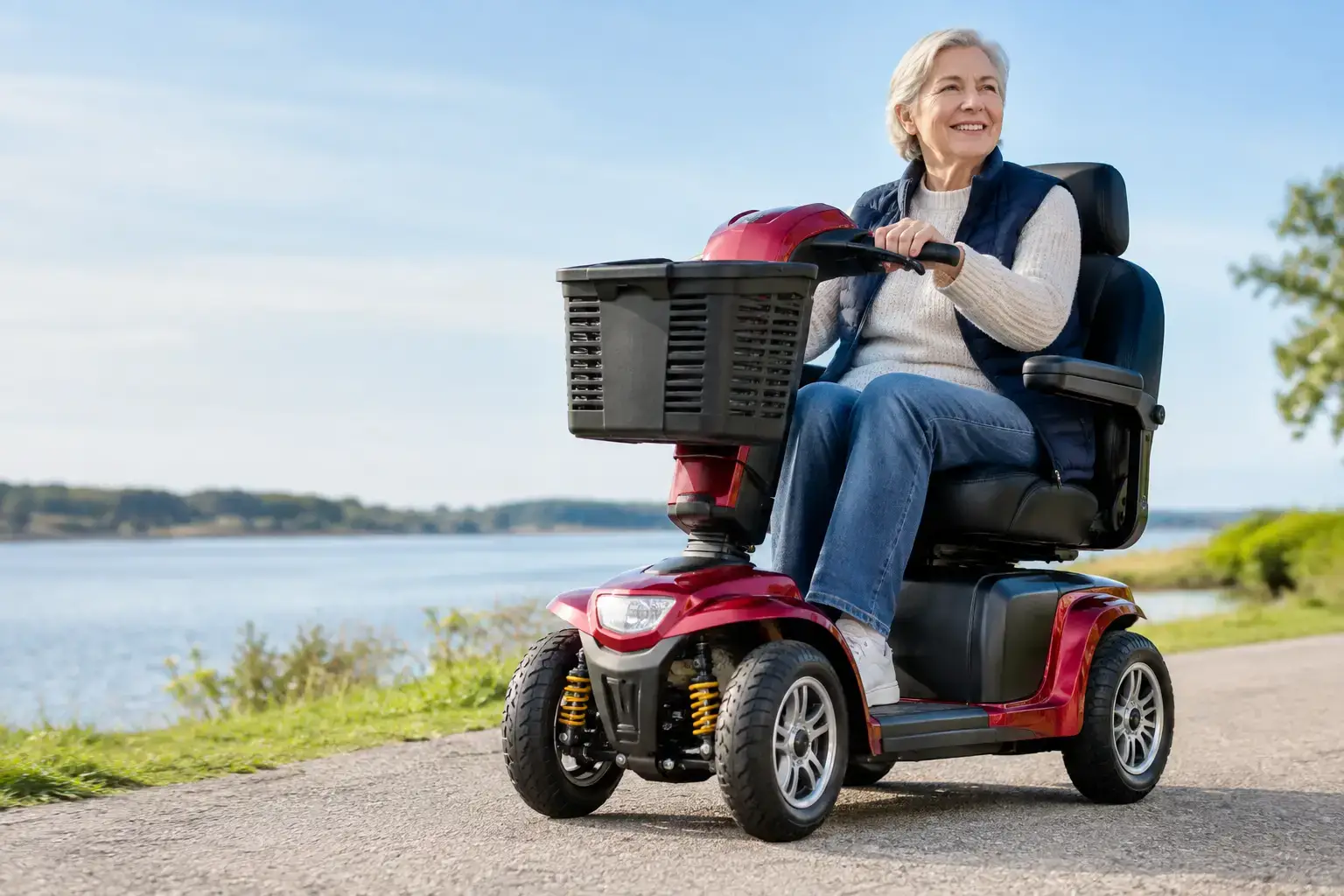
Suspension is the system of springs, shock absorbers or flexible components fitted between the wheels and the scooter frame. When a wheel meets a bump, the system allows controlled movement rather than passing the full impact straight to the rider.
A scooter with effective suspension usually feels more composed on imperfect surfaces. The wheels maintain better contact with the ground, the steering feels less unsettled and the seat moves less sharply over small obstacles. It cannot make rough ground completely smooth, and it does not remove the need to slow down for potholes, kerbs and loose gravel. It does, however, reduce the repeated vibration and sudden knocks that can make an outing tiring.
On a smooth indoor floor or newly laid pavement, you may notice little difference. On older pavements, village paths, dropped kerbs and uneven car parks, the benefit is often much clearer.
Front, rear and full suspension explained
Mobility scooters may have no suspension, rear suspension only, front suspension only or suspension at both ends. The layout matters because the front and rear wheels meet obstacles differently.
Rear suspension
Rear suspension is common on many mid-size and larger scooters. It helps soften impacts travelling through the back of the frame and can make a noticeable difference to seat comfort, especially over uneven paving. It is a useful feature for regular local trips, but the front wheels may still feel sharper over rough sections if there is no front suspension.
Front suspension
Front suspension can help the scooter handle uneven surfaces more calmly, as the front wheels are first to meet a bump. It can improve steering comfort and reduce jarring through the handlebars. This is particularly welcome for people who have sore hands, wrists or shoulders.
Full suspension
Full suspension means the scooter has a system at the front and rear. This is generally the best option for people travelling longer distances outdoors, using mixed routes or regularly crossing imperfect pavements and paths. Larger pavement and road-capable scooters often offer this arrangement, along with bigger wheels and a more supportive seat.
The trade-off is usually size, weight and cost. A fully suspended scooter may be less practical to lift, dismantle or store in a small flat. If you mostly use your scooter inside shops, around a level retirement development or for very short pavement journeys, a lighter model without full suspension may still be the better fit.
Is suspension worth paying extra for?
It is usually worth considering if comfort affects how often you can use your scooter. A cheaper scooter that leaves you sore or unsteady after a short journey is unlikely to feel like good value. Equally, there is no need to pay for a heavy all-terrain model if your routine involves level pavements and occasional indoor use.
Suspension may be particularly worthwhile if you:
- feel discomfort from bumps, vibration or hard seating
- travel on uneven pavements, dropped kerbs or gravelly paths
- use the scooter for longer local journeys rather than brief trips
- have back, hip, neck, wrist or joint concerns
- need extra confidence and stability when travelling outdoors
For first-time buyers, it helps to think about your real route rather than the ideal one. Consider the pavement outside your home, the route to local shops, the condition of the supermarket car park and whether you visit parks or family homes with uneven access. These details often tell you more than a specification list.
Suspension is only one part of ride comfort
A well-designed suspension system works alongside other features. Wheel size, tyre type, seat quality, ground clearance and the scooter’s overall weight all influence how it feels on the move.
Larger wheels generally cope better with cracks and small changes in surface level than very small solid wheels. Pneumatic tyres can add a little natural cushioning, although they need their pressure checked and may puncture. Solid or foam-filled tyres avoid punctures and maintenance, but can give a firmer ride. Neither choice is automatically right for every user.
The seat also deserves close attention. A padded, adjustable captain’s seat with armrests may make longer journeys far more comfortable, particularly when combined with rear or full suspension. A swivel seat can make getting on and off easier, while adjustable handlebars can help you find a relaxed driving position.
Ground clearance matters too. A scooter that sits very low may be fine for smooth ground but can catch on raised thresholds or uneven paths. More clearance can be helpful outdoors, but it does not mean the scooter should be driven quickly over rough terrain. Always approach kerbs and slopes carefully, follow the manufacturer’s instructions and keep within the scooter’s stated limits.
Choosing the right scooter for your usual journeys
Travel and car-boot scooters are designed around portability. They often dismantle into manageable sections or fold for transport, which is valuable if a family member needs to lift the scooter into a car. To keep them light and compact, many have limited or no suspension. Some users find them perfectly comfortable for short, level journeys, while others prefer a slightly larger model with better cushioning.
Mid-size pavement scooters can offer a helpful balance. They are usually more comfortable for regular local use, often have better seating and may include rear suspension or a more refined ride. They can suit users who want independence around town but do not need a large road-capable scooter.
For longer outdoor journeys and varied surfaces, larger 8 mph road-capable scooters commonly provide full suspension, larger wheels, stronger lighting and greater range. These models can feel more secure on mixed routes, although they take more storage space and may not suit car transport. Road use also brings added responsibilities, including understanding the relevant rules and keeping the scooter properly maintained.
If you are buying for a parent, partner or person you care for, do not focus only on the maximum speed or range. Ask whether they can sit comfortably for the length of their usual journey, reach the controls easily and manage the scooter safely on the ground they actually encounter.
Maintaining scooter suspension and tyres
Suspension needs less day-to-day attention than batteries, but it should not be ignored. If the ride suddenly becomes harsher, you hear knocking, the scooter pulls to one side or the frame appears to sit unevenly, arrange an inspection. Worn components can affect comfort and handling.
Keep tyres inflated to the recommended pressure where applicable, as under-inflated pneumatic tyres can make steering feel heavy and reduce range. Check for visible damage, loose fixings and dirt around moving parts. After wet or muddy journeys, wipe the scooter down and avoid storing it outdoors uncovered for long periods.
Regular servicing is a sensible way to protect a significant purchase. A technician can check the suspension, brakes, steering, tyres, battery connections and general condition before small issues become more inconvenient or costly.
Try to match comfort with practicality
The best mobility scooter suspension is the one that suits the life you want to lead. A compact scooter may give you the freedom to travel by car and visit the shops with family. A fully suspended model may make the walk to the local café, park or chemist feel more comfortable and achievable again.
At Mobility Scooters UK Ltd, practical advice starts with your route, comfort needs and storage arrangements, not just a product label. Choose a scooter that feels manageable every day, because reliable comfort is what helps independence become part of your routine.