Top Mobility Aids After Surgery for Recovery
The right support can make the difference between feeling confined to one room and moving around your home with more confidence. The top mobility aids after surgery are not necessarily the most expensive or most advanced options. They are the ones that match your operation, strength, home layout and recovery plan, while helping you protect the area that is healing.
Your surgeon, physiotherapist or occupational therapist should always guide your weight-bearing and movement limits. A mobility aid can support a safer recovery, but it must not encourage you to do more than your clinical team has advised.
Top mobility aids after surgery: choosing by need
After an operation, your needs can change quickly. Someone recovering from a hip or knee replacement may need a walking aid indoors for several weeks, then a wheelchair or scooter for longer outings while stamina returns. Following foot, ankle or lower-leg surgery, keeping weight off one side may be the priority. After abdominal, heart or major surgery, fatigue and breathlessness may matter more than balance.
Start with the journey you need to make most often: getting from bed to bathroom, reaching the kitchen, attending appointments, or managing a trip to the local shops. It is also worth considering who will be nearby to help, whether there are steps at the entrance, and how you would transport the equipment.
Crutches for short-term weight relief
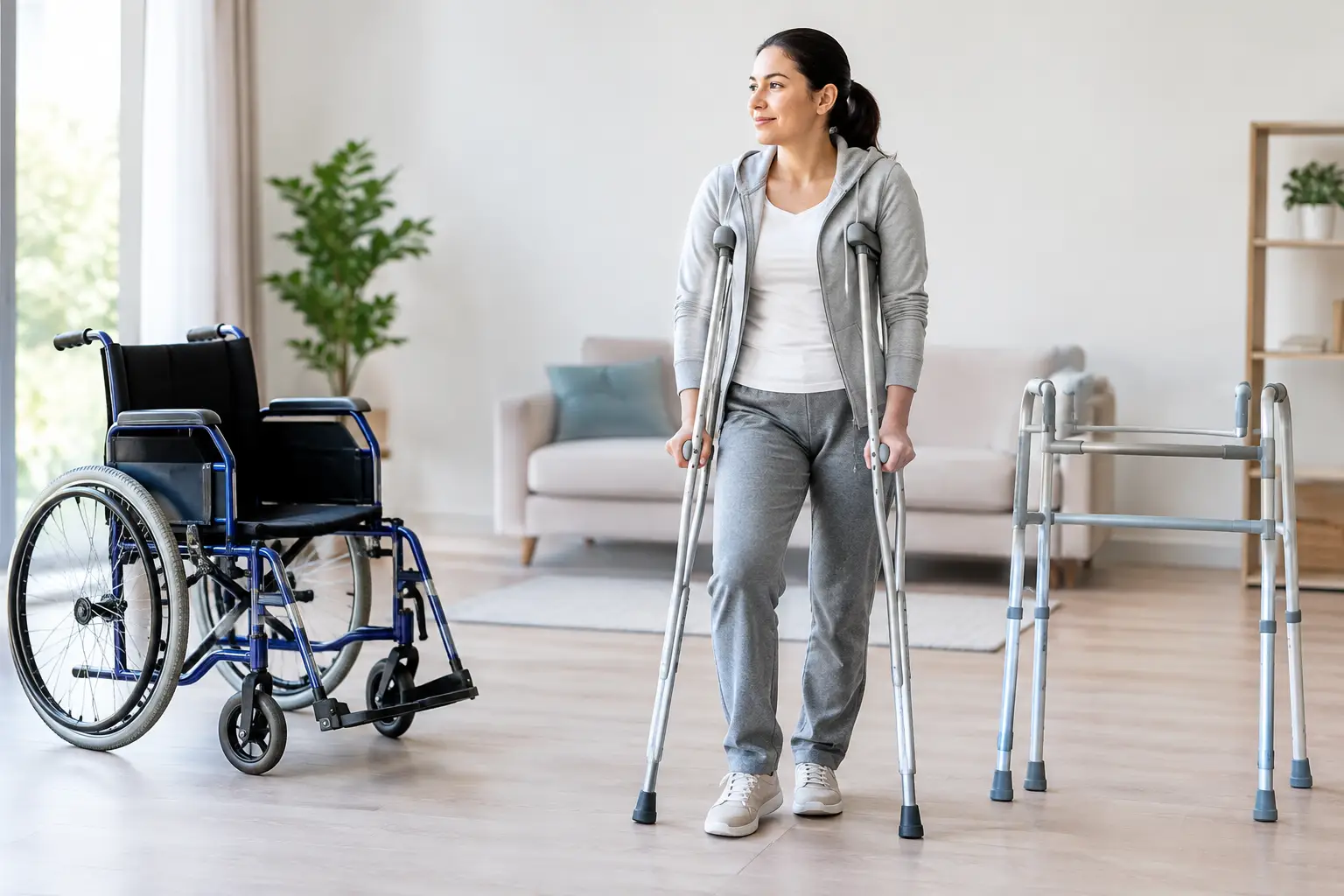
Crutches are often supplied after surgery to reduce weight through one leg or foot. They are compact, familiar and useful for managing short distances where you have adequate upper-body strength and balance.
Their drawback is that they demand energy and coordination. Using them when tired can be difficult, especially on uneven ground, stairs or when carrying anything. A small backpack or cross-body bag can be more practical than trying to hold items in your hands. If crutches leave you unsteady, sore in the hands or shoulders, or reluctant to move at all, ask your clinical team whether another option would be more suitable.
Walking sticks and tripod sticks for light support
A walking stick can provide a little reassurance when you are allowed to bear weight but still feel cautious. Quad or tripod sticks have a broader base and can stand independently, which may be helpful if you need a hand free to open a door or sit down.
A stick is not a substitute for a frame or crutches when you have been told to limit weight through a leg. Height matters too. A poorly adjusted stick can cause you to lean, strain your shoulder or adopt an awkward walking pattern. Your elbow should have a gentle bend when holding the handle.
Walking frames for steadier movement at home
A standard walking frame gives a wide, stable base and is often a good choice during the early stage of recovery. It can make the short but essential journeys around the house feel less daunting, particularly after hip, knee or lower-limb surgery.
Non-wheeled frames are very stable but must be lifted forward with each step, which can be tiring. Two-wheeled frames glide more easily and may suit people who have enough control to use them safely. In either case, check that the frame will fit through narrow doorways, around the bathroom and beside the bed. A frame that cannot reach the places you need it is unlikely to be used.
Rollators for confidence outdoors
A rollator is a wheeled walking aid with handlebars, brakes and usually a seat. It can suit people who are regaining mobility but need a stable point of support and regular rests outside the home. The built-in seat is particularly useful for queues, hospital corridors and short outings where benches are not guaranteed.
Rollators are not usually the best first choice if you are very unsteady or have strict weight-bearing restrictions. Because they roll, safe use depends on reliable hand brakes and the ability to control the aid. Choose a model with an appropriate user weight limit, an easy folding mechanism and wheels suited to the surfaces you use most.
Wheelchairs when walking uses too much energy
A wheelchair can be a sensible recovery tool, not a sign that progress has stopped. It helps conserve energy for appointments, family visits and days when pain or fatigue is greater, while reducing the risk of overdoing walking too soon.
A self-propelled manual wheelchair may work well for someone with good arm strength and space to manoeuvre. A transit wheelchair, designed to be pushed by another person, is often lighter and easier to lift into a car but offers less independence. For either type, measure doorways and consider whether the chair will fit through the kitchen, hallway and bathroom. Seat width, footrest position and a supportive cushion also affect comfort far more than many first-time buyers expect.
If you are buying for a relative, do not focus only on how easily the chair folds. A very lightweight chair can be helpful for car transport, but it still needs to give the user secure seating and suitable leg support. The best balance depends on whether it will be used occasionally for appointments or every day around home and community settings.
Powerchairs for limited stamina or arm strength
For longer recoveries, a powerchair may be appropriate where self-propelling a manual chair is difficult. It can offer controlled, independent movement indoors and outdoors, but it needs careful consideration. Turning space, storage, charging access, terrain and the user’s ability to operate the controls all matter.
Powerchairs are generally a longer-term decision than a pair of crutches or a basic frame. Before choosing one, consider whether recovery is expected to be temporary, and seek guidance where needed on the most suitable seating and control arrangement.
Mobility scooters for rebuilding everyday freedom
A mobility scooter can be a valuable option once your clinician is happy for you to sit comfortably and manage transfers safely. It is particularly helpful when walking distances are limited but you still want to get to local shops, visit friends or enjoy time outdoors without exhausting yourself.
For a temporary recovery period, a lightweight travel or car-boot scooter can be practical if it needs to go in a vehicle. Folding models can reduce storage demands, although lifting any scooter component must be realistic for you or the person helping you. Pavement scooters are suited to local journeys, while larger road-capable or all-terrain models offer more range and comfort but are less convenient to transport or store.
Scooters are not designed to replace a walking aid inside a small home, and they are not appropriate if pain medication, dizziness or restricted movement makes safe control difficult. Think about your route before buying: dropped kerbs, slopes, uneven paving, weather and secure charging storage all affect whether a scooter will genuinely make life easier.
Do not overlook bathroom and transfer support
Many falls happen during ordinary routines, especially when standing up, turning or managing a wet bathroom floor. A raised toilet seat, toilet frame, shower chair or commode wheelchair can reduce the strain of sitting and standing after surgery. Grab rails may also help, but they need to be properly installed in a suitable wall rather than treated as a quick fix.
A bed rail or chair riser can be useful for some people, particularly where bending precautions apply. However, these aids must fit the furniture correctly. Improvised supports and loose equipment can create a new hazard at a time when balance is already affected.
How to make the right choice
Before ordering any mobility aid, take a few practical measurements and answer a few honest questions. Measure the narrowest doorway, the car boot if transport matters, and the storage space available. Consider the user’s height, weight, grip strength and whether they can safely get on and off the equipment without twisting or reaching too far.
It is also sensible to plan for a change in recovery. You may start with a frame indoors, use a wheelchair for longer appointments, then find a scooter useful as you return to local outings. There is no single best route back to independence. The right equipment should support the stage you are at now without making your next stage harder.
For higher-consideration items such as wheelchairs, powerchairs and scooters, specialist advice can provide reassurance on fit, portability and everyday use. Mobility Scooters UK Ltd offers a broad choice of recognised mobility brands alongside practical support for customers and carers who want to choose with confidence.
Give yourself permission to use the help that makes recovery more manageable. Moving safely, resting when needed and keeping everyday life within reach can protect both your progress and your independence.