

Pavement Scooter Rules Explained for UK Riders
A mobility scooter can make the walk to the local shops, a visit to friends or an afternoon in town feel possible again. But before setting off, understanding the pavement scooter rules explained below will help you travel with confidence, protect pedestrians and choose a scooter that genuinely suits your everyday life.
Pavement scooter rules explained: start with the class
In the UK, mobility scooters are generally divided into Class 2 and Class 3 vehicles. The rules that apply to you depend on the scooter’s official class, not simply what it is called in a shop or how it looks.
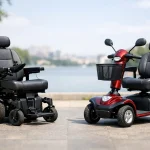
A Class 2 mobility scooter is designed mainly for pavements, pedestrian areas and indoor spaces such as shopping centres. Its maximum speed is 4 mph. These are often the practical choice for shorter local journeys, especially where you need a compact scooter that is easy to handle around people, doorways and shop aisles.
A Class 3 mobility scooter can travel at up to 8 mph on the road and up to 4 mph on pavements or in pedestrian areas. It must be registered with the DVLA, although there is no registration fee or vehicle tax to pay. Class 3 scooters are usually larger, with features that support road use, such as lights, indicators, mirrors and a horn.
Many people refer to any 4 mph scooter as a pavement scooter. That is useful shorthand, but always check the vehicle classification on the scooter itself and in its handbook. If you are replacing an older model, do not assume the rules are identical just because both scooters have a similar top speed.
The 4 mph pavement speed limit
The most familiar rule is also the one that matters most around other people: the maximum speed on a pavement is 4 mph. This applies to Class 2 scooters and to Class 3 scooters when they are being used on pavements, footpaths, precincts and other pedestrian areas.
Four miles per hour may feel slow if the pavement is clear, but it gives you time to react when someone steps out of a doorway, a child changes direction or a dog lead stretches across your path. Pedestrians have priority. A mobility scooter is there to support your independence, not to make people feel they need to jump out of the way.
Use a pace that suits the conditions rather than treating 4 mph as a target. In a busy high street, near a school gate, at a bus stop or inside a shopping centre, slowing down further is considerate and often safer. Leave room when passing people, especially wheelchair users, parents with pushchairs and anyone who may not hear you approaching.
If your scooter has a horn, use it gently when needed to make others aware of you. It should not be used to pressure somebody to move. A polite verbal warning is often better at close range.
Where you can and cannot use a pavement scooter
A Class 2 scooter can normally be used on pavements and pedestrianised areas. It may also be used to cross a road safely. It is not intended for general road travel, even if there is no convenient pavement for part of the journey.
A Class 3 scooter may be used on roads where appropriate, but there are clear exceptions. You must not use a Class 3 scooter on motorways, in bus lanes, on cycle-only lanes or on cycle tracks. If there is a pavement alongside the road, use it where it is safe and practical, remembering to reduce your speed to 4 mph.
For road crossings, use a dropped kerb, pedestrian crossing or another safe place whenever possible. Approach kerbs straight on and slowly. A high kerb can damage a scooter, affect its balance or leave you stuck halfway through a journey. If your regular route includes steep slopes, uneven paving or difficult crossings, it is worth considering this before choosing a scooter. A compact travel model may be ideal for car trips, while a more stable pavement or road-capable model may be better for daily outdoor use.
Private land can have its own rules. Shopping centres, supermarkets, leisure venues and housing developments may restrict where scooters can go, ask users to travel at walking pace or provide designated routes. Staff are usually trying to keep everyone safe, so it is sensible to check before visiting somewhere unfamiliar.
Who is allowed to use a mobility scooter?
You must usually be at least 14 years old to drive a mobility scooter or powered wheelchair on public pavements and roads. The vehicle should be used by someone who has difficulty walking because of injury, physical disability or a medical condition. It may also be used by somebody demonstrating the scooter before it is supplied to an eligible customer, or by an attendant in limited circumstances.
You do not need a driving licence to use a mobility scooter. Insurance is not legally required, but it is strongly worth considering. Public liability cover can provide reassurance if there is an accident involving another person or their property. It may also help to check whether household insurance offers any cover, although policies vary.
You should be able to control the scooter safely. This includes steering, braking, judging space, responding to hazards and managing the controls at lower speeds. If you are new to scooters, start somewhere quiet and level. Practise turning, reversing, stopping and using the speed control before attempting a crowded town centre or busy road crossing.
Extra rules for Class 3 road-capable scooters
A Class 3 scooter needs to be registered with the DVLA before it is used on public roads. It must display a maximum speed of 8 mph and have a device that limits it to 4 mph for pavement use. It should also have an efficient braking system, a horn, rear-view mirror, front and rear lights, reflectors and indicators.
When driving on the road, follow the Highway Code as far as it applies to mobility scooter users. Travel in the correct direction, obey traffic lights and road signs, and make your intentions clear. Take particular care at roundabouts, junctions and parked cars, where drivers may not expect a slower vehicle.
Visibility deserves real attention. Use lights when conditions are poor, not only after dark. Rain, low winter sun and dusk can make a scooter much harder for drivers to spot. Bright or reflective clothing can also help, particularly if your journey includes road sections.
A Class 3 scooter offers more flexibility, but it is not automatically the best choice. Larger scooters can be more comfortable for longer journeys and may offer greater range, suspension and storage. On the other hand, they can be harder to store, lift into a car or manoeuvre in a narrow hallway. The right model is the one that fits your route, your home and your confidence level.
Everyday habits that make scooter journeys safer
Good scooter use is often about small routines. Check that your battery has enough charge for the return journey, particularly in colder weather when batteries can perform differently. Keep tyres in good condition, make sure the seat is secure and test the brakes before setting off.
On the pavement, look ahead for broken surfaces, drainage covers, loose gravel and pavement clutter. Avoid sharp turns at speed and take slopes steadily. Do not carry heavy bags from the handlebars, as this can affect steering and balance. A basket, bag hook designed for the scooter or secure under-seat storage is a safer option.
If you use a mobility scooter after taking medication that causes drowsiness, dizziness or slower reactions, speak to a pharmacist or healthcare professional about whether it is safe to travel. The same applies if your vision, concentration or coordination has changed. Independence works best when it is supported by sensible planning.
Choosing a scooter around the rules and your route
The legal class is only one part of the decision. Think honestly about where you expect to travel most weeks. For pavement trips to nearby shops, appointments and visits, a Class 2 scooter may offer the straightforward, manageable solution you need. If you need to travel further or use roads where there is no suitable pavement, a registered Class 3 option may be more appropriate.
Also consider storage and transport. A folding or car-boot scooter can give you freedom on days out, but may have smaller wheels and a shorter range than a full-size pavement scooter. A larger model can feel more secure over uneven ground, yet needs suitable space at home and may not fit easily in every vehicle.
Mobility Scooters UK Ltd can help customers and carers compare these practical differences, from portability and comfort to road capability and everyday support needs. Asking a few questions before buying is far easier than discovering later that a scooter is too heavy, too large or not suitable for your usual route.
The best journey is one that feels calm from the moment you leave the door. Choose a scooter that matches your surroundings, keep the speed right for the people around you, and give yourself time to travel safely and comfortably.