

Mobility Scooter Versus Rollator: Which Is Best?
A trip to the local shops can feel very different when pain, breathlessness or poor balance limits how far you can walk. Choosing between a mobility scooter versus rollator is not simply about buying an aid – it is about finding the support that lets you keep doing the everyday things that matter, safely and with confidence.
A rollator and a mobility scooter both improve independence, but they do it in very different ways. One supports you while you walk; the other takes over when walking is no longer comfortable or practical for longer distances. The best choice depends on your mobility, where you go, how you travel and the level of support you need.
Mobility scooter versus rollator: the key difference
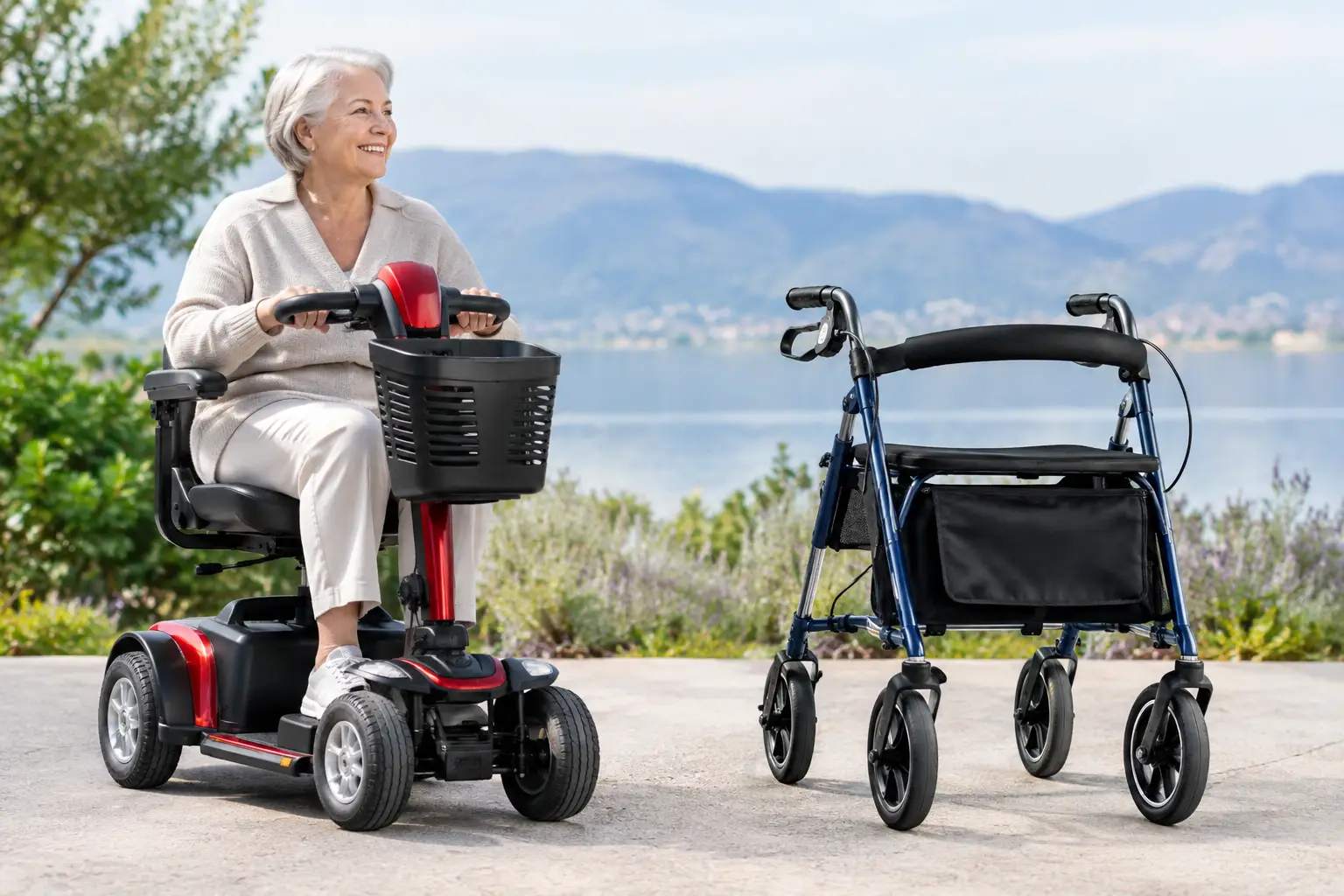
A rollator is a wheeled walking frame, usually with four wheels, hand brakes and a seat. It is designed for people who can still walk but benefit from something steady to hold, especially when balance, joint pain or stamina are a concern. Many people use a rollator around the home, in shops, at appointments or on short walks, with the built-in seat providing a useful place to rest.
A mobility scooter is a battery-powered vehicle with a seat, steering controls and a stable base. It is intended for people who cannot comfortably walk far, even with a frame. It can make longer journeys to the shops, around town, through parks or on holidays more manageable without leaving the user exhausted before they arrive.
The question is not which option is better in general. It is which one matches the distance you need to cover and the movement you can safely manage on a typical day.
When a rollator may be the right choice
A rollator can be an excellent option if you remain able to walk independently but need extra reassurance and regular rest breaks. It offers support without taking you away from the natural movement of walking, which may be important if you have been advised to stay active within your limits.
For many people, the greatest benefit is confidence. A properly adjusted rollator gives you something reliable to hold onto when walking from room to room, moving around the supermarket or crossing a car park. The brakes allow you to steady yourself before sitting, while the seat means you are not always searching for somewhere to rest.
Rollators are often easier to store than scooters and can be a practical choice for smaller homes. Folding models can fit into many car boots, making them useful for visiting family, going to clinics or taking day trips. They also tend to be more affordable than powered mobility equipment.
There are limits, however. A rollator is not a substitute for a wheelchair or scooter when fatigue is severe. It still requires you to stand, walk, steer and operate the brakes safely. Uneven pavements, steep slopes and long shopping trips can remain difficult, particularly if pain or breathlessness builds quickly.
A rollator is likely to suit you if:
You can walk short to moderate distances, need help with balance or fatigue, have enough hand strength to use the brakes, and want a compact aid for everyday support. It can also work well as a second piece of equipment alongside a scooter for use indoors or at destinations where a scooter would be awkward.
When a mobility scooter may be the better option
A mobility scooter is often the more suitable choice when walking distance is the main barrier to independence. If you avoid going out because you cannot manage the journey from the car park to the shops, need to stop repeatedly, or are too tired to enjoy an outing once you arrive, a scooter can make a meaningful difference.
It provides a supportive seat and lets you travel without putting the same strain through your hips, knees, feet or lungs. This can be particularly helpful for people living with arthritis, neurological conditions, long-term pain, heart or lung conditions, or reduced mobility after illness or injury.
The right model depends heavily on how you plan to use it. A lightweight travel or car-boot scooter can be dismantled or folded for transport, although you or a companion must be able to lift the separate parts safely. A pavement scooter offers more comfort and range for local errands. Larger road-capable models provide greater suspension, seating and outdoor capability, but need more storage space and are less straightforward to transport in a car.
A scooter is not automatically the answer for every situation. You need somewhere secure and dry to store and charge it, and you must be able to get on and off safely. Good vision, concentration and control are essential when using one around pedestrians, kerbs and traffic.
Consider a mobility scooter if:
Walking even short distances leaves you in pain or exhausted, you want to travel further in your local area, or you need a comfortable seated option for regular outings. Before choosing, think realistically about door widths, hallway turns, storage, the terrain near your home and whether you will need to lift it into a vehicle.
Comfort, portability and day-to-day use
Comfort means different things with each option. A rollator offers the comfort of support while staying on your feet, with a seat for short pauses. A scooter gives you continuous seated comfort and reduces the physical effort of moving around, but it takes more planning to park, charge and transport.
Portability is also more than a product weight. A folding rollator may be easy to put in a boot, but it still needs to be lifted and unfolded. A travel scooter may come apart into manageable pieces, but the heaviest section can still be too much for some people or carers. It is always worth checking individual component weights rather than looking only at the overall product weight.
For use at home, measure narrow points such as doorways, hallways and turns around furniture. A rollator can be easier to manoeuvre indoors, while a compact scooter may suit a more spacious property. Outside, look at dropped kerbs, pavement condition, hills and the distance to your usual destinations.
Safety questions to ask before you decide
Whichever option you choose, a good fit matters. With a rollator, the handle height should allow you to stand upright rather than stoop. The brakes should be easy for you to reach and squeeze, and the frame should feel stable when you sit on it.
With a mobility scooter, check that the seat is comfortable, your feet sit securely on the footplate and you can operate the controls without straining. A swivel seat, adjustable armrests and supportive suspension can make a significant difference, especially if you use the scooter regularly.
Scooter users should also understand the rules for the type of scooter they choose. Pavement scooters are generally limited to 4 mph. Road-capable Class 3 scooters can travel at up to 8 mph on the road, but must be used at 4 mph on pavements and need to meet additional legal requirements. Training or a careful familiarisation session is sensible for first-time users, particularly before heading out alone.
Could you benefit from both?
For some households, the answer is not a strict choice between one or the other. A rollator can be useful for short indoor journeys, getting from the front door to the car, or walking around places where a scooter is not convenient. A mobility scooter can then cover the longer distances that would otherwise stop you from going out.
This combination can be especially useful when your mobility changes from day to day. On a better day, a rollator may provide all the support you need. On a difficult day, a scooter can preserve your energy for the activity itself rather than using it all on getting there.
If you are buying for a parent, partner or person you care for, involve them in the decision wherever possible. Their comfort, confidence and routines are just as important as the measurements and specifications. Mobility Scooters UK can help make those practical questions easier to work through, from transport and storage to comfort and everyday use.
The most helpful choice is the one that makes the next outing feel possible: a steady walk to the corner shop, a relaxed afternoon with family, or the freedom to go out without worrying about the journey home.