


What Mobility Scooter Servicing Should Include
A mobility scooter can make the difference between putting off a trip to the shops and going out when you choose. That freedom depends on a scooter that starts reliably, stops safely and feels comfortable to control. Regular mobility scooter servicing is the practical way to spot wear, battery problems and loose components before they interrupt everyday plans.
For many owners, servicing is also reassuring. You may use your scooter every day for pavement journeys, visiting family or getting around a larger home or community. A professional check gives you a clearer picture of its condition and helps protect the investment you have made in your independence.
What does mobility scooter servicing involve?
A proper service is more than a quick clean or a battery charge. The exact work will depend on the make, model, age and condition of your scooter, but it should focus on the parts that affect safety, comfort and dependable performance.
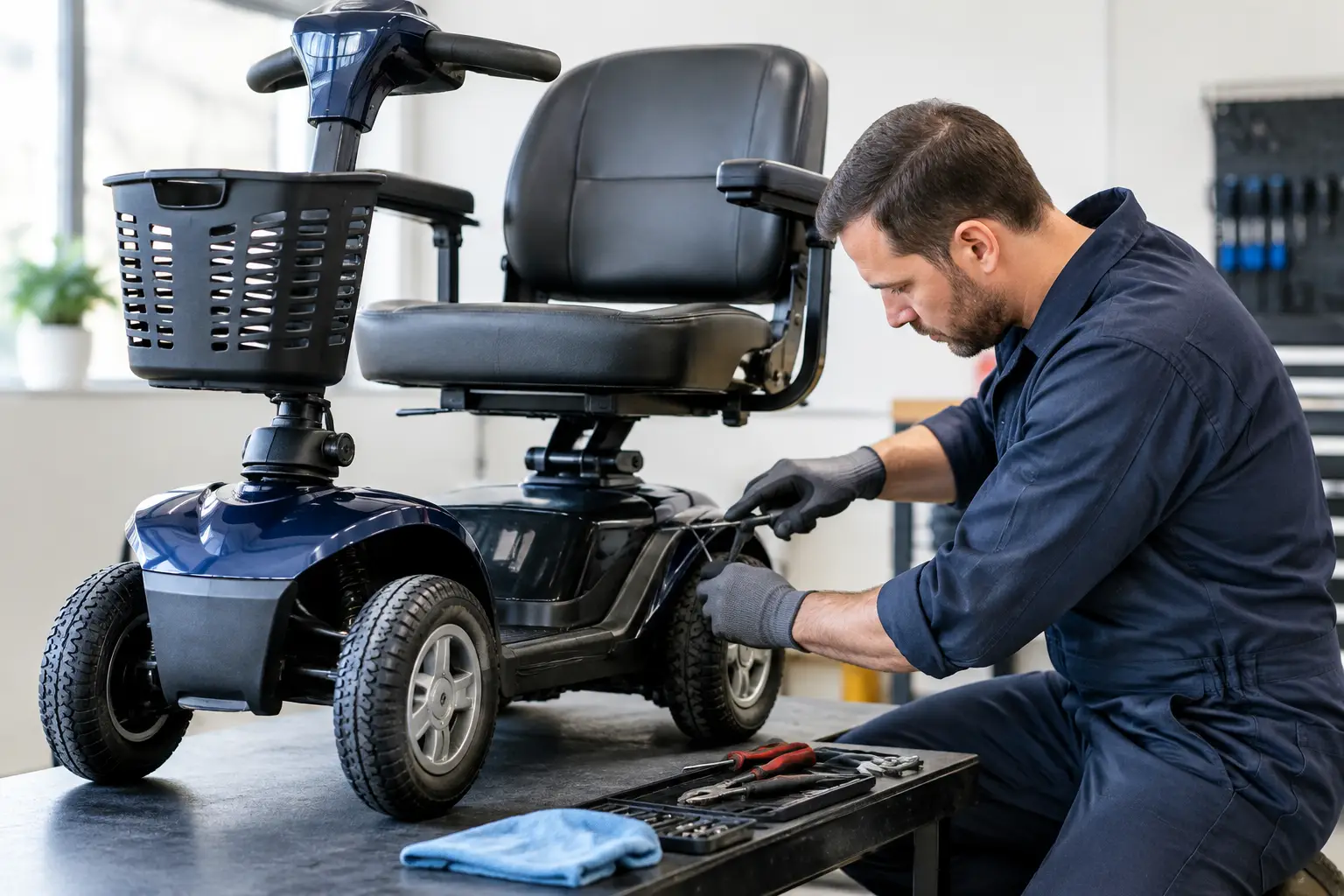
A technician will normally inspect the scooter’s frame, seat, steering column and controls for damage, movement or signs of wear. They should check that the throttle responds correctly, the speed settings work as intended and the key switch operates properly. Brakes are a priority too, including the automatic electromagnetic brake found on many scooters. If your scooter rolls when it should be stationary, moves unexpectedly or makes a new noise when braking, it needs attention promptly.
Tyres also deserve careful inspection. Pneumatic tyres need suitable pressure and should be checked for cuts, embedded debris and worn tread. Solid tyres cannot go flat, but they can still wear down, crack or become uneven. Worn tyres may reduce grip and make kerbs, slopes and wet paths harder to manage.
The electrical system is another central part of a service. This can include checking battery condition, terminals, wiring, charger connections, lights, indicators and horn where fitted. A technician may test whether the batteries are holding charge as expected. Batteries naturally lose capacity over time, particularly if the scooter has been stored for long periods or left discharged.
For road-capable Class 3 scooters, checks may also cover lights, indicators, mirrors, hazard lights and the speed settings used on the road and pavement. A service does not replace the owner’s responsibility to use the scooter safely, but it helps make sure key equipment is in sound working order.
How often should a mobility scooter be serviced?
For most people, an annual service is a sensible starting point. It gives a professional the chance to identify gradual wear that is easy to miss during day-to-day use. If you rely on your scooter frequently, travel over uneven ground or use it in all weathers, you may benefit from a check sooner.
Usage matters more than the calendar alone. A lightweight folding scooter used occasionally for holidays and shopping centres may have very different needs from a larger pavement or all-terrain scooter used daily. Heavy loads, frequent kerbs, rough surfaces and regular folding or dismantling can all place extra strain on particular components.
Book a service early if you notice reduced range, difficulty charging, a pulling sensation while driving, loose steering, unusual vibration, squeaking, warning lights or a change in braking. Do not wait for a complete breakdown if the scooter is behaving differently. Small faults are often simpler and less costly to address before they affect other parts.
A service is not the same as a repair
Routine servicing looks for developing issues and carries out standard checks and adjustments. A repair deals with a known fault, such as a failed charger, damaged tyre, faulty controller or worn battery. Sometimes a service reveals that replacement parts are needed, in which case the technician should explain the work clearly before it goes ahead.
This distinction helps when comparing prices. A lower-priced service may cover inspection only, while another may include labour for certain adjustments. Parts, batteries and major repairs are commonly charged separately. Ask what is included, whether collection is available and if there is any call-out charge before booking.
Simple checks between services
Professional attention is valuable, but a few regular habits can help keep your scooter ready for use. Before a journey, look for obvious damage, check that the seat is secure and make sure the controls are working normally. Keep the scooter clean and dry, especially around the footwell, charging socket and controls. Avoid using a pressure washer, as water can reach electrical parts.
Battery care has a major effect on reliability. Follow the guidance supplied for your particular scooter and charger, and use the correct charger rather than a substitute that happens to fit. Charge in a dry, ventilated place and avoid letting batteries run completely flat where possible. If the scooter will not be used for several weeks, check the manufacturer’s storage advice, as batteries may still need regular charging.
If your scooter has pneumatic tyres, check the pressure when the tyres are cold. Underinflated tyres can reduce range, affect handling and wear more quickly. Do not overload the scooter or carry bags from the handlebars unless the manufacturer specifically permits it. Added weight can affect steering and stability, particularly on turns and slopes.
Choosing the right servicing support
Mobility scooters vary widely. A compact car-boot model has different components and access points from a large enclosed scooter, so it is worth choosing a provider familiar with mobility equipment and your model where possible. Established manufacturers may have specific diagnostic processes, software or approved parts that help ensure work is carried out correctly.
When arranging a service, have the scooter’s make, model and serial number to hand. Explain how it is used and mention any concerns, even if they seem minor. Details such as “the range has dropped”, “it clicks before moving” or “the steering feels stiff after rain” can help the technician focus their inspection.
Collection and home servicing can be particularly useful when transport is difficult. However, workshop servicing may be more suitable for faults requiring specialist equipment or longer investigation. The right choice depends on the scooter, the problem and your access needs. If collection is arranged, remove personal belongings and make sure the key, charger and any relevant paperwork are available if requested.
At Mobility Scooters UK Ltd, servicing and parts enquiries are supported as part of our wider after-sales service, helping customers find a practical route to keeping their equipment in use. Whether your scooter is a compact travel model or a road-capable option, clear advice can make the next step feel much more straightforward.
When not to use your scooter
Some faults should not wait for a routine appointment. Stop using the scooter and seek advice if you smell burning, see smoke, notice damaged wiring, find the battery casing swollen or leaking, or lose braking control. The same applies if the scooter accelerates unexpectedly, cannot be switched off normally or has damage to its frame, steering or wheels.
Do not attempt electrical repairs yourself unless you are qualified to do so. Batteries and controllers can store significant electrical energy, and unsuitable replacement parts may create a safety risk. It can be tempting to keep going when a scooter still moves, especially if it is your main way of getting about. Yet a short pause for the right repair is safer than being left stranded away from home.
A service that protects everyday freedom
Regular servicing is not about finding problems for the sake of it. It is about giving your scooter the best chance of being there when you need it – for appointments, fresh air, a visit with friends or an ordinary trip that matters to you. Keep an eye on small changes, follow the care guidance for your model and arrange support early when something does not feel right.