


How to Transport a Wheelchair Safely by Car
A wheelchair should make getting out easier, not turn every car journey into a stressful lifting job. Knowing how to transport a wheelchair safely starts with one simple question: are you transporting the chair on its own, or travelling while the person remains seated in it? The right answer affects the vehicle, the equipment you need and, most importantly, everyone’s safety.
For many families and carers, a folding manual wheelchair will fit in a car boot with a little planning. A heavier powerchair or an occupied wheelchair is a different matter. Taking time to check weights, dimensions and restraint options before buying or travelling can protect independence and avoid an expensive mismatch.
Transporting a wheelchair in a car
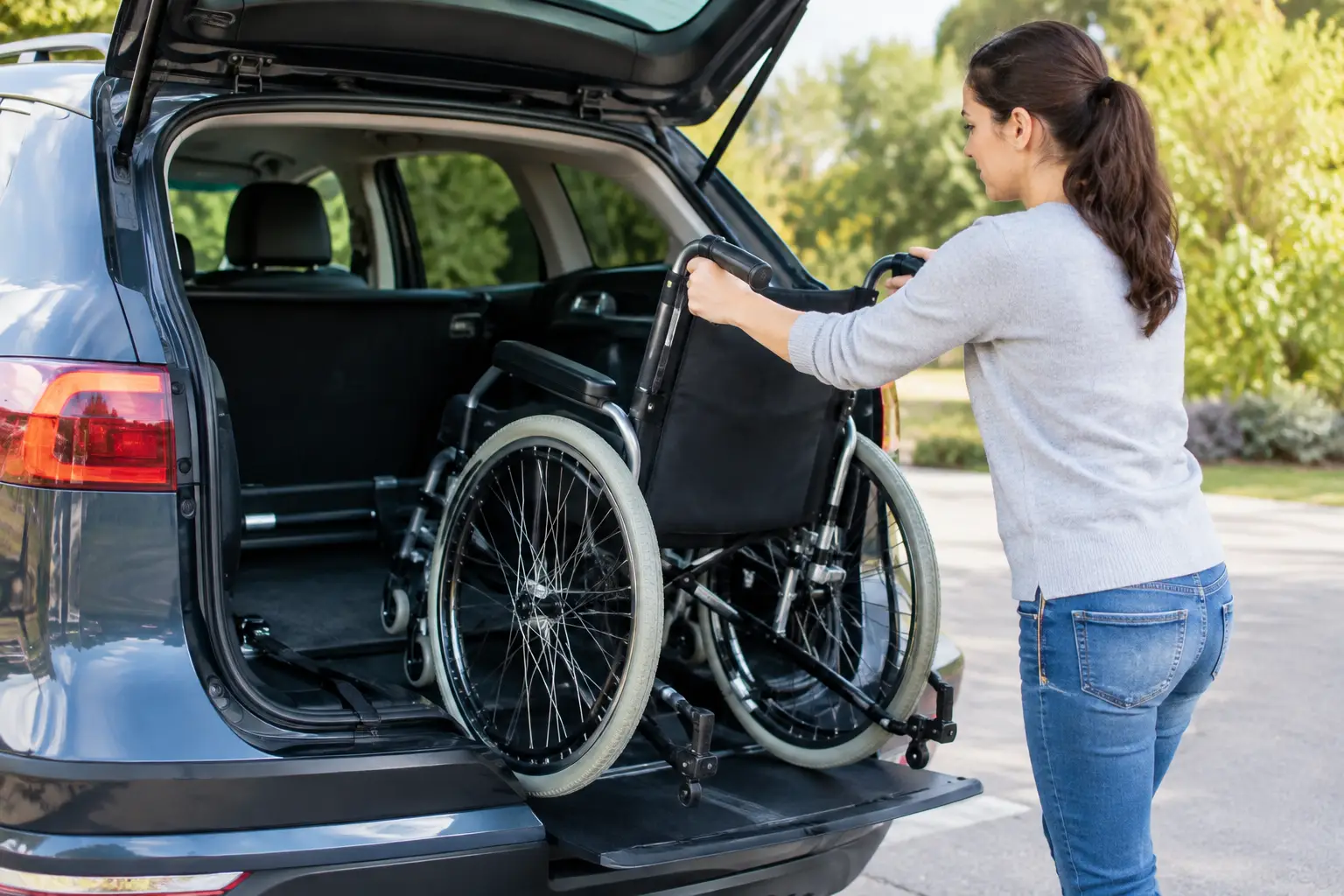
If the wheelchair user transfers into a normal car seat, the wheelchair should be folded or dismantled where possible, then secured in the boot or loading area. Do not leave it loose on a rear seat or in the footwell. Even a lightweight chair can move sharply under braking.
Start by checking the boot opening, not just the boot capacity. A chair may fit once inside but still be awkward to lift over a high lip or through a narrow opening. Measure the folded wheelchair at its widest and tallest points, then compare this with the opening of your vehicle. Remember that cushions, footrests and bags can add more bulk than expected.
Most folding manual wheelchairs are designed for this type of travel. Fold the backrest if it folds, remove detachable footplates if needed and release quick-release rear wheels only if you are comfortable refitting them correctly. Keep small removable parts together in a labelled bag so they do not get lost between journeys.
Once loaded, place the chair as flat and low as possible. Use the vehicle’s luggage restraint points, a boot strap or a properly fitted cargo net to stop it sliding. Apply the wheelchair brakes before folding or handling it, but do not assume brakes alone will hold the chair in place during travel.
Make lifting manageable, not risky
A wheelchair may look light enough to lift until it has to be raised, twisted and pushed across a boot lip. Check the chair’s actual carry weight rather than its user weight limit. The carry weight is what you, a family member or a carer will be lifting.
Where lifting is unavoidable, stand close to the chair, bend your knees and keep the load near your body. Avoid lifting by armrests, footrests, wheels or removable parts. If the chair is too heavy to lift comfortably, do not make do with an unsafe routine. A lighter folding wheelchair, a car boot hoist, a portable ramp or a vehicle with a lower load height may be the better long-term choice.
Powerchairs and mobility scooters usually require more planning. Some travel models dismantle into separate pieces, while folding powerchairs may fit into larger car boots. Full-size powerchairs are often too heavy for manual lifting and may need a ramp, hoist or wheelchair-accessible vehicle. Batteries must also be secured and protected from damage.
How to transport a wheelchair user safely
When a person stays in their wheelchair during a journey, the vehicle must be suitable for wheelchair transport. This normally means a wheelchair-accessible vehicle, accessible taxi or minibus fitted with an approved wheelchair tie-down and occupant restraint system.
The wheelchair should be positioned in the designated space, usually facing forwards unless the vehicle system specifically permits another position. Four-point tie-downs secure the wheelchair frame to floor anchorages, while a separate lap and shoulder belt restrains the passenger. The vehicle belt should sit against the person’s body, not over bulky clothing, armrests or the wheelchair’s side panels.
Never rely on the wheelchair’s brakes, anti-tippers or a standard seat belt looped around the chair as the main restraint. These are not substitutes for the correct equipment. If a wheelchair is being used as a vehicle seat, check whether the manufacturer states that it is suitable for transport and follow its instructions. Some chairs have clearly marked securement points for tie-downs.
A headrest may be needed for safe travel where the wheelchair does not provide adequate head and neck support. Loose bags, oxygen equipment, walking sticks and other items should be restrained too. A sudden stop can turn everyday belongings into hazards.
It is sensible to allow extra time for boarding, positioning and checking restraints. Rushing is when straps are missed, belts are twisted or a wheelchair is left slightly out of position. A good driver or escort will be happy to pause until the passenger feels secure and comfortable.
Choosing the right transport solution
The best option depends on how often you travel, who will handle the chair and the level of support the user needs. A compact folding wheelchair can be an excellent choice for occasional shopping trips, appointments and holidays where a relative can lift it safely. It is not always the right answer for someone who needs complex seating, a higher weight capacity or all-day comfort.
For regular car use, consider these practical questions before choosing a chair or vehicle:
- Can the wheelchair be folded, dismantled or lifted without strain?
- Will it fit through the boot opening with the rear seats in their usual position?
- Does the user transfer safely into a car seat, or need to remain in the wheelchair?
- Is there room for shopping, a walking aid, medical equipment or another passenger?
- Will the chair be transported by more than one person, each with different lifting ability?
There is often a trade-off between comfort and portability. A chair with a larger seat, heavier frame and more supportive cushions may be more comfortable for longer days out, but less convenient to lift. Lightweight models are easier to transport, but should still provide suitable support and a safe fit for the user.
At Mobility Scooters UK, practical questions around folded size, product weight and car boot suitability are treated as part of choosing the right mobility equipment, not an afterthought. It is always worth checking the product measurements against your own vehicle before ordering.
Taxis, buses, trains and air travel
A booked wheelchair-accessible taxi is often the simplest option for a user who remains seated in their chair. When booking, explain whether the wheelchair is manual or powered, its approximate size and whether the passenger will travel in it. This helps the operator send a suitable vehicle rather than one with a ramp that is too steep or a space that is too small.
On buses, use the marked wheelchair space and follow the driver’s instructions. Local arrangements vary, but the chair should usually be facing the required direction with brakes on. Avoid blocking aisles or relying on a companion to hold the chair steady.
Train travel benefits from advance planning. Booking passenger assistance can help with ramps, platform access and finding the wheelchair space. Check the train operator’s requirements for powered wheelchairs, particularly the combined chair and passenger weight where ramps are involved.
For flights, contact the airline before travelling. Tell them the wheelchair’s dimensions, weight, battery type and whether it folds. Airlines have specific rules for batteries, especially lithium batteries, and may need the chair checked in at the gate or handled separately. Remove or protect loose controls and label the wheelchair with clear handling information if possible.
A quick check before every journey
Before setting off, check that tyres are sound, brakes work and any detachable parts are fitted or packed securely. For powerchairs, make sure the battery is charged and the controller is switched off before loading. Keep essential items such as medication, a cushion, keys and the user’s mobile phone within reach rather than buried beneath the chair.
If something feels too heavy, unstable or awkward, treat that as useful information rather than a problem to push through. The right chair, vehicle aid or accessible transport option can make every trip calmer, safer and far more enjoyable – leaving more energy for where you are going.