Best Powerchairs for Outdoors in Britain
A smooth shopping-centre floor can make almost any powered wheelchair feel capable. A sloping pavement, loose gravel path or wet park trail is where the difference becomes clear. The best powerchairs for outdoors are not simply the biggest or fastest models. They are chairs that suit the routes you use, keep you comfortable for longer and give you confidence to get out more often.
For some people, that means a compact chair with good pavement handling for trips to the local shops. For others, it means larger wheels, suspension and a supportive seating position for country paths, gardens and longer days out. Choosing well starts with an honest picture of where you want to go.
What makes a powerchair suitable for outdoor use?
Outdoor powerchairs need to deal with surfaces that change from one minute to the next. Pavement cracks, dropped kerbs, cambers, puddles and rough car parks all place different demands on the chair and its user. A model designed mainly for indoor use may turn tightly in a hallway but feel unsettled or uncomfortable on uneven ground.
Look first at the wheels and tyres. Larger drive wheels generally cope better with outdoor obstacles and can offer a more assured ride over imperfect surfaces. Pneumatic tyres can provide useful cushioning and grip, although they need occasional pressure checks and are vulnerable to punctures. Solid tyres remove that concern but may transmit more vibration through the chair. There is no single right answer – the terrain you use most matters more than a specification sheet.
Ground clearance also deserves attention. A little extra space beneath the chair can help when crossing threshold strips, uneven paving and shallow kerbs, but it does not turn a powerchair into an off-road vehicle. Even all-terrain-style models have limits, particularly on steep, muddy or heavily rutted ground.
Suspension is another worthwhile feature for regular outdoor use. It can reduce jolts from rough paths and make longer journeys less tiring. This is especially valuable if you experience pain, fatigue, poor trunk control or sensitivity to vibration. A supportive seat and good suspension often make a bigger difference to day-to-day enjoyment than a small increase in top speed.
Choosing the best powerchairs for outdoors by journey type
The right category depends on your usual journeys rather than the most challenging route you might take once a year.
Pavements, shops and local errands
If your regular journeys include pavements, pedestrian areas, pharmacies and local cafés, a mid-size pavement powerchair can be a sensible balance. Seek a stable base, comfortable seating, dependable range and tyres that can cope with uneven paving. Check the overall width as well. A chair that handles outdoor routes well still needs to fit through your front door, gates and the places you visit.
A compact model may be suitable where storage space is limited and your outdoor routes are mostly smooth. However, very small wheels and a lightweight frame can make poorly maintained pavements feel more demanding. If you often travel alone, do not underestimate the reassurance of a chair that feels planted and predictable.
Parks, gardens and rougher paths
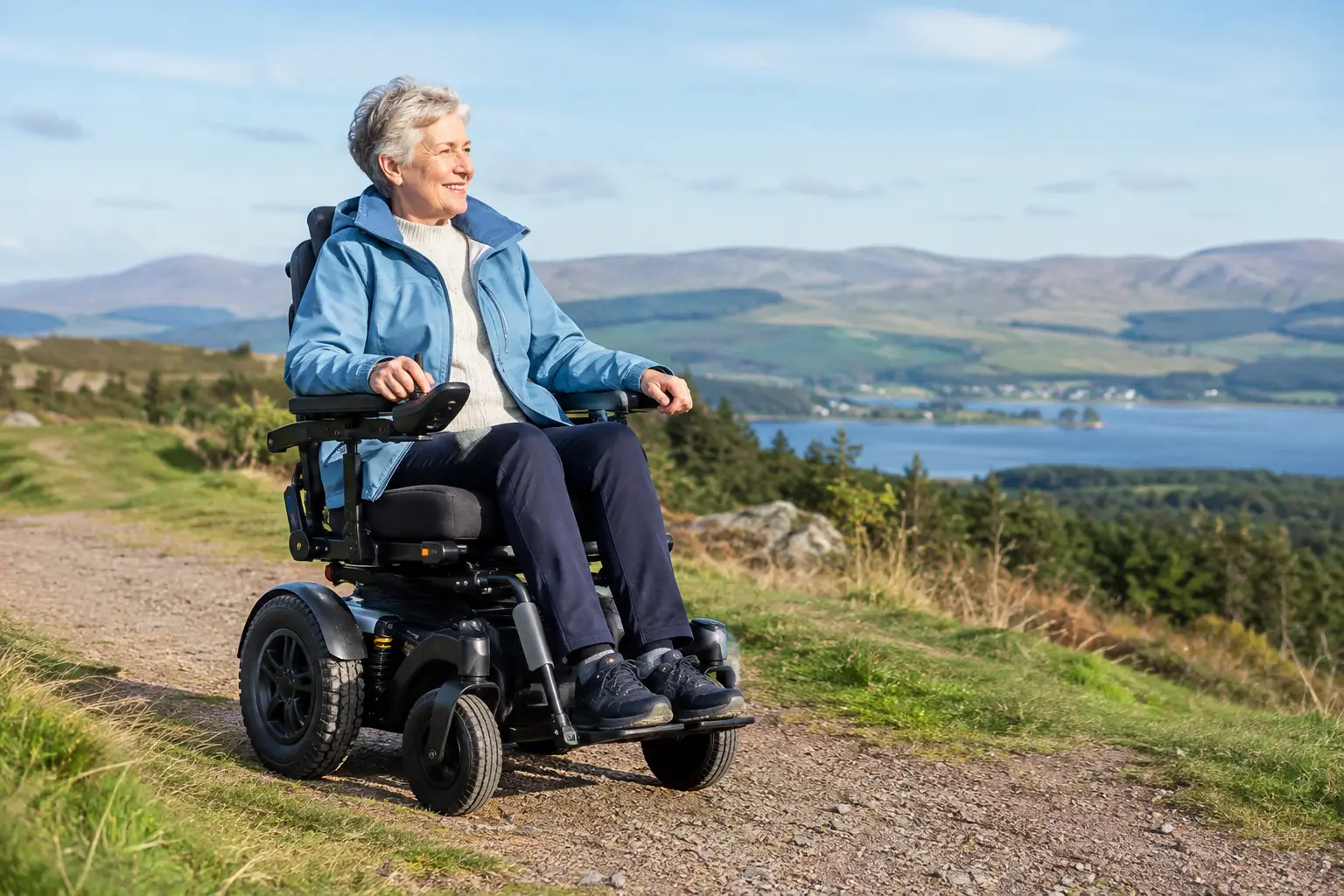
For grass, gravel, woodland tracks and uneven park routes, consider a larger outdoor or all-terrain powerchair. These chairs commonly offer bigger wheels, deeper-tread tyres, improved suspension and a more substantial frame. They can be an excellent choice for people who want to enjoy gardens, coastal promenades and countryside access routes without every bump becoming a concern.
The trade-off is size and weight. A more capable outdoor chair may be harder to lift, less convenient to transport in a family car and too wide for some indoor spaces. Before ordering, measure doorways, narrow passages, storage areas and vehicle access carefully. It is better to identify a practical limitation at home than after delivery.
Longer trips and road-capable travel
Some powerchairs are suitable for longer outdoor trips and may be classed for road use. In the UK, a Class 3 vehicle can travel at up to 8 mph on the road and up to 4 mph on pavements, subject to the relevant rules. These models may include lights, indicators, mirrors and a horn, helping them be seen and used more confidently when appropriate.
Road capability does not mean every road is safe or suitable. Busy roads, fast traffic, narrow lanes and poor visibility all call for care. If road use is part of your plan, choose a chair with the required equipment and take time to understand how its speed settings, lights and controls work. Class 3 vehicles must be registered with the DVLA, although there is no vehicle tax to pay.
Range: plan for real life, not the headline figure
Battery range is often one of the first figures buyers compare, but published maximum ranges are achieved in favourable conditions. Hills, cold weather, heavier loads, softer ground, frequent stops and tyre pressure can all reduce the distance you can travel on a charge.
Think about your longest typical round trip, then allow a comfortable margin. A journey to the shops may look short on a map, but add a hill, a detour and time spent waiting outdoors, and the battery works harder. Charging after use, rather than waiting until the battery is nearly empty, helps keep a routine simple and reduces worry before the next journey.
Ask about the battery type, charger and realistic charging time. If you depend on your powerchair every day, dependable battery care matters just as much as the chair itself. It is also reassuring to buy from a specialist that can help with replacement batteries, chargers and servicing when needed.
Comfort is an outdoor safety feature
A powerchair should support your posture rather than merely carry you from A to B. When travelling outdoors, you may spend longer seated and encounter more movement from the surface beneath you. An adjustable seat, armrests, footplate and back support can help you stay comfortable and in control.
Consider whether you need pressure-relieving cushioning, a headrest, lateral support or powered seating functions such as tilt or recline. These features can be particularly helpful for people with complex seating needs, but they may affect the chair’s weight, price and transport requirements. A simple, well-fitted chair is often preferable to a feature-heavy model that does not suit your body or daily routine.
The maximum user weight is equally important. This limit must not be exceeded and should include anything regularly carried on the chair, such as bags or essential equipment. Choosing within the correct weight capacity supports safety, handling and long-term reliability.
Check your home, transport and storage before buying
The best outdoor chair can still be the wrong purchase if it cannot get out of the house. Measure your narrowest doorway, hall, gate, shed or charging space. If a ramp is involved, make sure it is suitable for the chair’s weight and gradient. Consider turning space too, especially in porches and hallways.
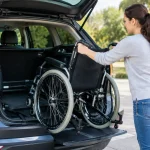
Transport is another practical question. Most full-size outdoor powerchairs are not designed to be lifted into a car boot. You may need a wheelchair-accessible vehicle, hoist or trailer, depending on the model. Folding and travel powerchairs are easier to take away, but usually make compromises in range, suspension and performance on rougher terrain.
Store the chair somewhere dry and secure, with access to a mains socket for charging. Electronics and batteries cope best when protected from prolonged rain and very low temperatures. A weather cover can help when the chair must be parked outside briefly, but it is not a replacement for proper storage.
Take a careful approach to slopes and weather
Outdoor independence should never mean taking unnecessary risks. Check the route before using unfamiliar paths, especially if there are steep slopes, loose surfaces or hidden kerbs. Approach kerbs as instructed for your chair, travel slowly on uneven ground and avoid turning sharply on a slope.
Rain reduces grip and makes leaves, painted markings and metal drain covers slippery. Strong winds can also affect stability, particularly on open ground. If conditions feel doubtful, changing the route or delaying the trip is good judgement, not lost independence.
For buyers who are uncertain between two chair types, specialist advice can save costly mistakes. Mobility Scooters UK can help customers compare practical details such as chair size, outdoor capability, comfort features and delivery considerations, so the choice feels more manageable.
The right outdoor powerchair should make your usual places feel more reachable: the local high street, a family garden, a park bench or a friend’s front door. Start with the journeys that matter most to you, choose a chair that can handle them comfortably, and leave room for the freedom to go a little further.