


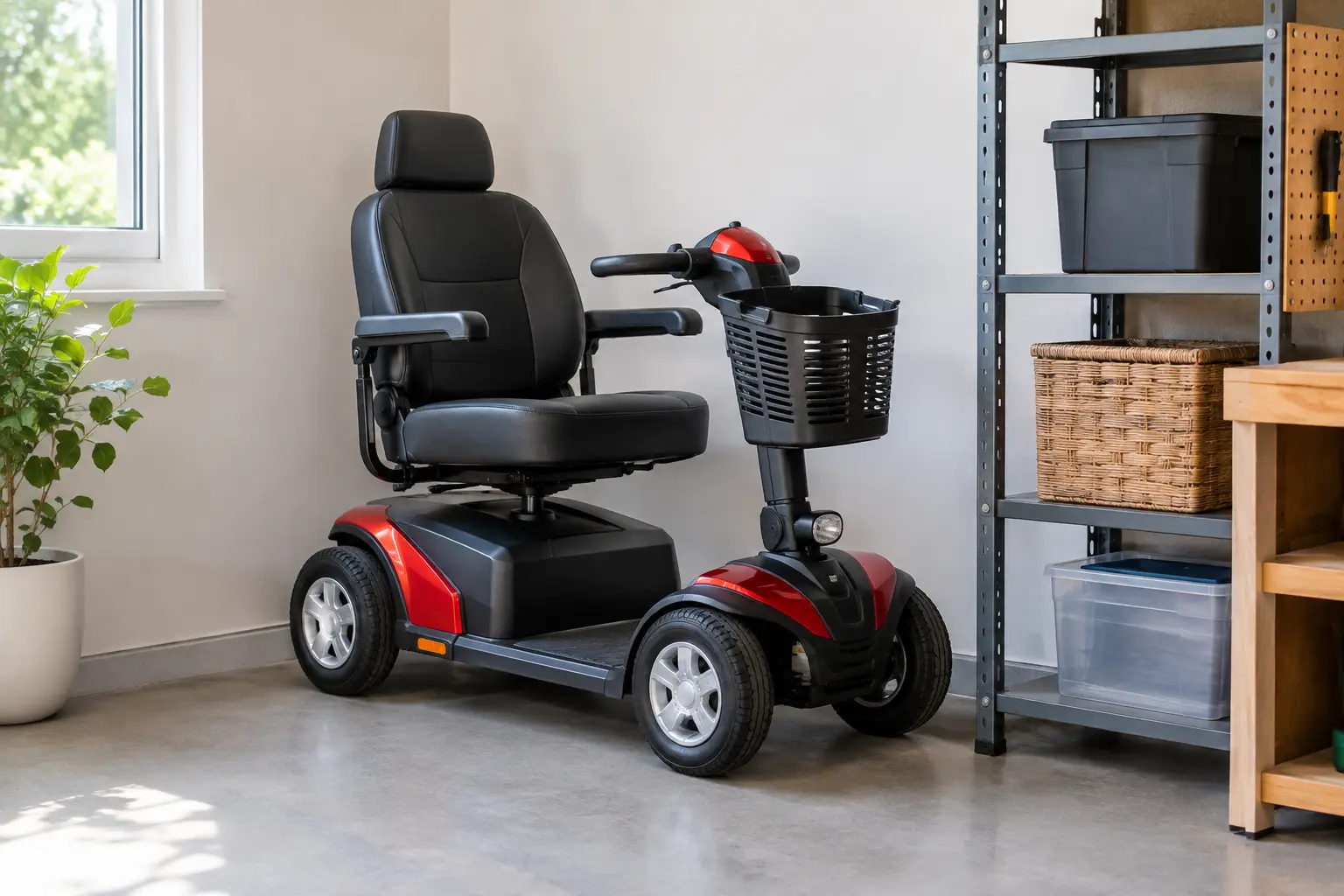
How to Store a Mobility Scooter Safely at Home
A mobility scooter gives you the freedom to get to the shops, visit friends or enjoy time outdoors without relying on someone else for every journey. Good storage helps protect that freedom. Knowing how to store a mobility scooter properly can prevent flat batteries, damp electrics, tyre damage and avoidable repair bills, while ensuring it is ready when you need it.
The best arrangement depends on your scooter, the space available and how often you use it. A compact folding travel scooter can often live indoors, while a larger road-capable model may need a garage, shed or secure outdoor space. Whatever type you own, aim for somewhere dry, sheltered, level and easy to reach.
Choose a dry, accessible place
A dry garage, hallway, utility room or purpose-built storage unit is usually ideal. Moisture is one of the main risks to a mobility scooter. It can affect electrical connections, encourage corrosion and leave seats or controls feeling cold and damp. If you have a shed, check that its roof does not leak and that the floor stays dry after heavy rain.
Avoid leaving your scooter in the open, even with a cover over it. A cover provides useful short-term protection, but rain, condensation, frost and strong sunlight can still take their toll over time. If outdoor storage is your only option, choose a lockable, weather-resistant storage box or shelter large enough for the scooter, with ventilation to reduce condensation.
Accessibility matters just as much as protection. There is little benefit in storing a scooter behind heavy furniture, up steps or where you must move several items before each outing. Keep a clear route from the storage area to the front door, driveway or pavement. If there is a threshold or step, a suitable ramp can make daily use safer and less tiring.
How to store a mobility scooter between journeys
For everyday storage, park the scooter on a firm, level surface and switch it off fully. Remove the key if your model has one, especially if it is kept in a shared garage, communal hallway or outbuilding. This is a simple security measure and can also help prevent the scooter being switched on accidentally.
Make sure the scooter is in drive mode rather than freewheel mode before leaving it. Freewheel is useful for moving an unpowered scooter by hand, but it should not be left that way when parked. On a slope, even a slight one, this could allow the scooter to roll.
If you have been out in wet weather, wipe down the tiller, seat, basket and bodywork with a soft, dry cloth before putting the scooter away. Pay particular attention to the charging socket and control area. Do not use a hose or pressure washer, as water can be forced into places it should not reach.
A breathable scooter cover is useful in a garage or shed to keep off dust and dirt. Do not cover the scooter immediately if it is wet or very cold from being outdoors. Let it dry first, otherwise moisture can become trapped underneath.
Look after the battery while it is stored
The battery is central to reliable scooter use, and it needs regular attention even when the scooter is not being used. Follow the charging instructions in your scooter handbook, as battery type and charger requirements vary between models. Many modern scooters use sealed batteries, but their care is not identical across every manufacturer.
For a scooter used several times a week, charging after use or as recommended by the manufacturer will normally keep it prepared for the next journey. For occasional use, do not simply leave it for weeks or months with a low battery. A battery left discharged can lose capacity and may fail to recover fully.
If you are storing the scooter for a longer period, such as during a hospital stay, winter break or extended holiday, charge the batteries first. Then check the handbook for the recommended top-up schedule. Some scooters benefit from being left connected to their approved charger in a suitable indoor location, while others should be charged periodically instead. Using the wrong approach can shorten battery life, so the handbook should always take priority.
Only use the charger supplied or approved for your scooter. A charger that looks similar may have the wrong output and could damage the batteries or charging system. Keep the charger dry, allow air around it while in use and avoid trailing leads where they may become a trip hazard.
Very low temperatures can reduce battery performance. If possible, store the scooter somewhere that stays above freezing. A cold garage may be acceptable for the scooter itself, but removable batteries are often better kept indoors in a dry, temperate room if the manufacturer permits this. Never place batteries near a radiator, fire or direct heat source.
Prepare a scooter for longer-term storage
If you know the scooter will not be used for a month or more, give it a little care before you put it away. This reduces the chance of an unpleasant surprise when you return to it.
First, clean off mud, salt, leaves and grit. Road salt is especially worth removing during winter because it can contribute to corrosion. Dry the scooter thoroughly, then check the tyres for cuts, embedded debris or signs of under-inflation. Pneumatic tyres can slowly lose pressure while a scooter is parked, and a flat spot may develop if it stays in one position for a long time.
Inflate pneumatic tyres to the pressure stated in the handbook. Do not guess, as the correct pressure varies by scooter and tyre. If you can do so safely, moving the scooter slightly every few weeks helps vary the point at which the tyres meet the ground. Solid tyres do not need inflation, but should still be checked for wear or splitting.
Remove personal belongings from the basket, seat pouch and storage compartments. Food, drinks and damp gloves can attract pests or create unwanted smells. If the scooter has a removable seat or detachable battery box, only remove them where it makes storage safer and you can lift them comfortably. Do not risk a strain simply to save a little space.
Keep your scooter secure without blocking your home
Mobility scooters are valuable equipment, so storage should include security as well as weather protection. A locked garage or shed is a good starting point. You may also wish to use a sturdy ground anchor and security chain where appropriate, particularly for larger scooters stored in an outbuilding.
Do not store a scooter in an escape route, on stairs or in a narrow shared corridor. It may be tempting to keep it close to the door, but it must not block safe access for you, visitors or emergency services. In flats and sheltered accommodation, check the building rules before using communal areas. Some properties have specific guidance because charging and storage can affect fire safety.
It is also sensible to keep the key separately and retain details of the scooter’s make, model and serial number. Taking a few clear photographs can help with identification if needed.
Consider the space before buying a scooter
Storage is worth considering before choosing a scooter, not after it arrives. Folding and travel scooters are often a practical choice where indoor space is limited or the scooter needs to go in a car boot. They can be easier to store, although some components may still be heavy to lift.
Larger pavement and road scooters offer more comfort, range and stability for regular outdoor journeys, but need more room to park and turn. Measure doorways, gates, shed entrances and the space where the scooter will stand. Remember to allow room to get on and off, connect the charger and move around it safely.
At Mobility Scooters UK Ltd, specialist advice can help you weigh up portability, comfort and storage needs before making a decision. The right scooter should fit your daily life, not create a new obstacle at home.
A well-stored scooter is more likely to feel dependable when an appointment, family visit or a simple trip out cannot wait. Give it a dry home, charge it as its manufacturer advises and keep the route to it clear – small routines that help protect your independence every day.