


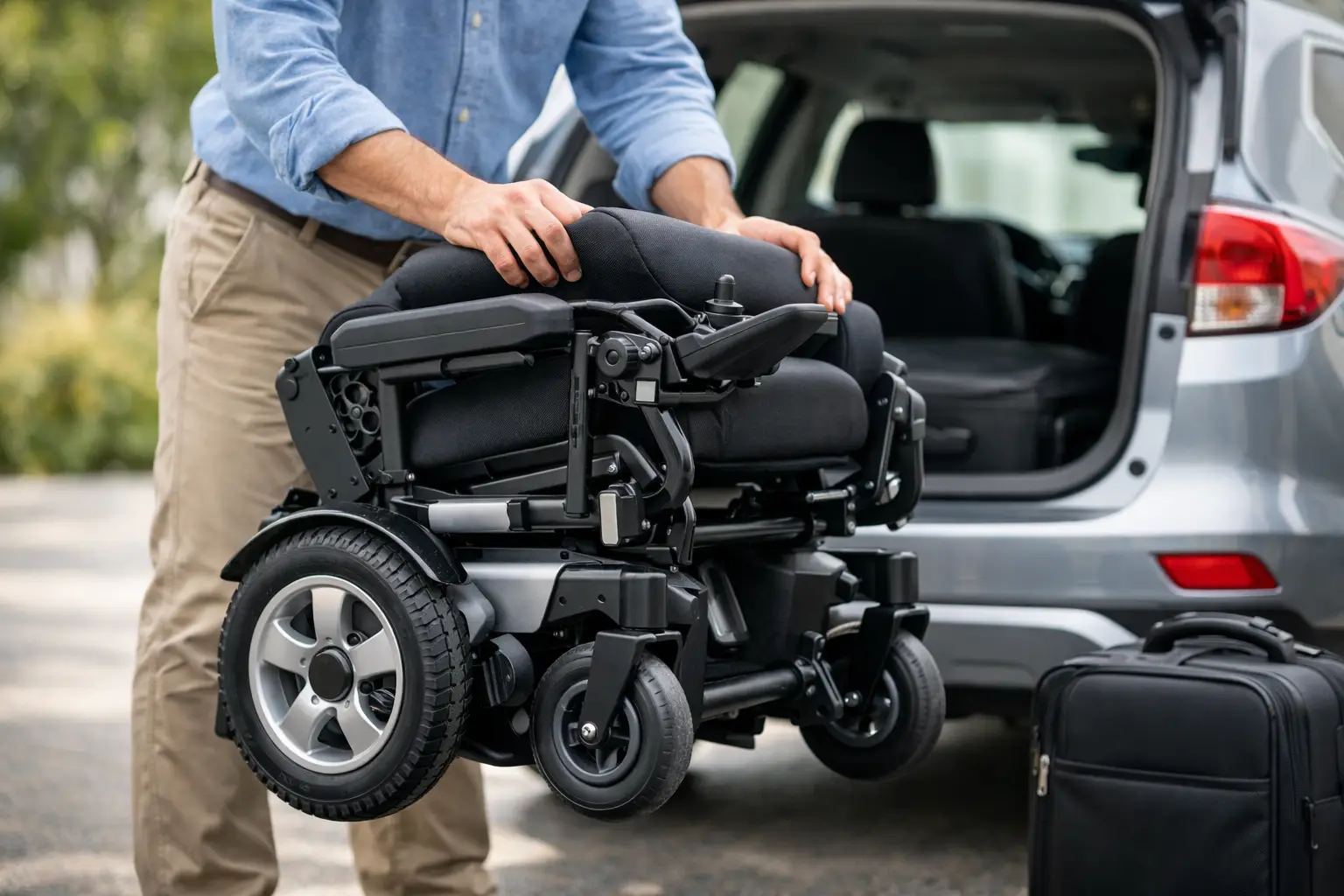
How to Fold a Powerchair Safely for Travel
A folding powerchair can make a trip to the shops, a family visit or a holiday feel far more manageable – but only when it is folded in the correct order. Knowing how to fold a powerchair protects the chair, helps avoid strain when lifting and means it is ready to use safely when you arrive.
The most useful rule is simple: follow the instructions for your exact model first. Folding powerchairs can look similar, yet their release catches, battery positions and locking points vary. Some fold in one movement; others need the footplates, armrests or battery removed first. Never force a part that will not move freely.
Before you fold a powerchair
Choose level, dry ground with enough space around the chair. Switch the powerchair off using its controller, then remove the key if your model has one. This prevents an accidental movement while your hands are near the frame or wheels.
Apply the brakes if they operate separately. Most powered chairs hold themselves still when switched off, but checking the chair is stable is worthwhile, particularly on a driveway, pavement or sloping car park. Keep fingers, loose clothing and bags clear of the folding joints.
Take any personal items off the chair. A walking stick, shopping bag, cushion or lap blanket can get caught in the mechanism, add weight or stop the frame closing properly. If there is a detachable seat cushion, check the handbook before removing it. On some designs it can stay in place, while on others it needs to come off before folding.
If you have just used the chair in wet weather, wipe away excess rain, mud and grit from the frame and folding areas. This is not about keeping the chair looking tidy alone. Dirt in a catch or hinge can make it harder to lock and may cause unnecessary wear over time.
How to fold a powerchair: the usual method
Many lightweight travel powerchairs use a central folding frame. The precise handle or lever differs by manufacturer, but the process below covers the checks that matter for most models.
- Park and power down. Position the chair on firm, level ground, switch it off and make sure nothing is stored underneath or behind the seat.
- Prepare the removable parts. Fold up the footplates where possible. Remove a detachable headrest, side bag or cushion only if the manufacturer advises it. Make sure the joystick controller cable has enough slack and is not trapped.
- Release the folding catch. Find the release lever, strap or handle, usually at the rear, beneath the seat or on the frame. Hold the chair securely with one hand before operating it. A well-maintained chair should begin to fold with steady pressure, not a sharp pull.
- Bring the sides of the frame together. Use the designated handle or frame bar and guide the chair closed slowly. Keep your hands on solid frame sections, never on the joystick, armrests or battery cover. Watch that cables, fabric and footplates remain clear.
- Check that it is locked for transport. Some chairs click into a folded position; others have a retaining strap or latch. Fit this before attempting to lift or move the chair. A partly folded powerchair can open suddenly and is awkward to handle.
- Lift only when you are ready. Use the manufacturer’s stated lifting points. If the chair is too heavy to lift comfortably, do not attempt it alone. A second person, a vehicle hoist or portable ramps may be the safer answer.
The chair should close without excessive resistance. Stop if you hear grinding, feel a cable pulling tight or find that one side is closing faster than the other. Open it again, look for an obstruction and consult the manual if the problem continues.
Chairs with a folding backrest or separate battery
Not every powerchair folds from the middle. Some compact models have a backrest that folds down first, followed by the frame. Others are designed so the battery slides out before folding, making the chair lighter for car transport.
If your battery is removable, turn the chair off before disconnecting it and use the built-in handle where supplied. Put the battery somewhere dry and secure, with its terminals protected from metal objects such as keys or tools. Avoid carrying it by its cables.
A battery does not always need to be removed. Taking it out can reduce the lifting weight, but it also adds another item to carry and reconnect. For regular short journeys, leaving it fitted may be more convenient if the handbook permits it and the total weight remains safe for you and your helper.
Loading a folded powerchair into a car
A folded chair is still a powered mobility aid, not a suitcase. Before lifting, check its folded weight, including the battery, against what you can safely manage. Many powerchairs are best handled by two people, especially when lifting over a boot lip.
Where two people are available, agree the lift before you start. Each person should hold an approved frame point, keep the chair close to their body and lift together using their legs rather than bending from the waist. Do not lift by the armrests, wheels, footrests or joystick.
For a hatchback or estate car, protect the boot interior with a blanket or boot liner, then place the chair carefully so it cannot slide about. Keep it upright if the manufacturer says it must travel that way. Secure it using suitable restraints or prevent movement with the boot layout, without placing straps over the controller, cables or delicate plastic covers.
A compact folding powerchair can be ideal for car boots, but it is not automatically the easiest choice for every household. If lifting is difficult, a powerchair that disassembles into lighter parts, or a vehicle hoist solution, may be more practical than a very compact chair with a heavy integrated battery.
Battery safety for storage and travel
Battery care is part of folding safely, particularly if the chair will be stored for more than a day or taken on a longer journey. Keep the battery dry, avoid very hot or freezing locations and charge it using the correct charger supplied or approved for the model.
For routine car journeys, follow the chair manufacturer’s guidance on whether the battery should remain connected. For air travel, contact the airline well in advance. Airlines have their own rules for lithium batteries, including limits on removable battery capacity, terminal protection and whether a battery must travel in the cabin. Tell the airline that you are travelling with a powered wheelchair, rather than assuming airport staff can treat every model in the same way.
Do not charge a battery immediately after it has been exposed to heavy rain or extreme cold. Let it dry and return to a moderate temperature first. If you notice a damaged casing, unusual heat, leaking fluid, a burning smell or a battery that no longer holds charge, stop using it and seek specialist advice.
Opening the chair again and checking it is safe
Once you have arrived, place the folded powerchair on level ground before unfolding it. Release the transport strap or latch, then guide the frame open using the correct handle. Keep clear of pinch points as the frame widens.
Listen for the locking click or check that the frame catch has fully engaged. Refit the battery, headrest, cushion and any accessories in the right order, then make sure the footplates are down and both armrests are secure. Check that the controller cable is free and the joystick returns to its centre position.
Switch the chair on only once you are seated safely or ready to test it with nobody in front of it. A short, slow test on level ground confirms that the chair responds correctly after transport. If it will not power on, begin with the simple checks: battery connection, key or power button, charging level and any visible cable issue.
Common folding mistakes to avoid
The most common problem is trying to fold a chair with something in the way. Shopping bags under the seat, a partly lowered footplate and a caught controller cable can all prevent a proper fold. Forcing the mechanism risks bending the frame or damaging wiring.
Another mistake is treating the chair as lighter than it is. Even a lightweight powerchair can be a significant lift once its battery is fitted. If you feel unsteady, have back or shoulder pain, or need to twist while reaching into a deep boot, ask for help rather than risking an injury.
Finally, do not store a folded chair where it can become damp, be knocked over or block an exit. A dry indoor space is usually best. Keep the charger and handbook nearby so the chair is ready for the next journey.
A few calm minutes spent practising at home can make folding feel familiar rather than stressful. If your particular chair is difficult to close, heavy to lift or no longer locks securely, specialist support can help you find a safer way to keep your independence moving.