


How to Choose Commode Chairs for Your Home
A trip to the bathroom can become difficult long before a person needs full-time care. For someone recovering from surgery, living with reduced balance or managing limited stamina, commode chairs can make the difference between struggling through the night and feeling safe, comfortable and in control at home.
The right model is not simply the one that looks most like a chair. It needs to suit the person using it, the room where it will sit and the help available from family or carers. A well-chosen commode should protect dignity while making everyday personal care more manageable.
What is a commode chair used for?
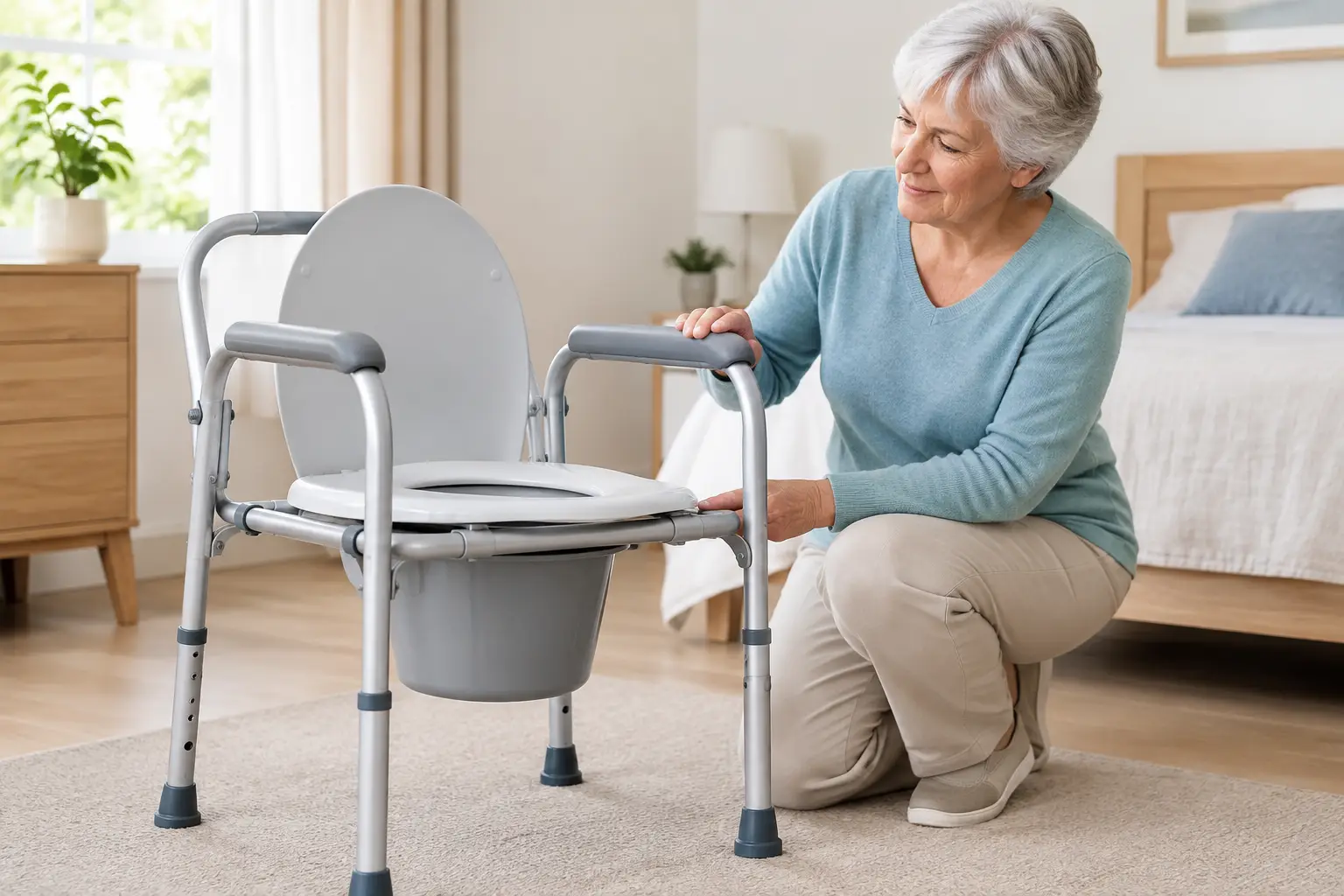
A commode chair is a freestanding chair with a removable pan or bucket beneath the seat. It provides a toilet option close to the bed, in a downstairs room or anywhere access to a bathroom is difficult. Some designs are intended only for bedroom use, while others can be wheeled over a toilet or used as a shower chair.
This can be particularly helpful when walking is painful, stairs are no longer practical, or getting to the bathroom quickly is difficult. It may be a short-term aid during recovery, or a longer-term part of a home care routine.
Commode chairs are often chosen by relatives and carers because they reduce the need for rushed, unsupported transfers. That said, a commode does not remove every risk. The user must still be able to sit down and stand up safely, either independently or with appropriate support.
The main types of commode chairs
The best type depends on where and how it will be used. Thinking about the daily routine first is more useful than comparing features in isolation.
Static bedside commodes
A static commode has four legs and is designed to remain in one place, usually near the bed. Many have armrests, a padded seat and a removable lid, so they can look less clinical when not in use. They are a sensible choice for people who can transfer with limited assistance and need a straightforward, affordable toileting solution close by.
Height-adjustable legs can be useful where the user is tall, shorter in stature or finds it hard to rise from a low seat. Armrests also matter more than they may seem. A firm surface to push from can make standing safer and reduce reliance on a carer.
Wheeled commode chairs
Wheeled models are designed for assisted movement between rooms and are commonly used in care settings or by people who need more support. Brakes are essential, both for transfers and when the chair is stationary. A model with swing-away or detachable footrests may make it easier to position the chair close to a bed, chair or toilet.
These chairs can offer greater flexibility, but they need enough turning room. Measure doorways, corridors and the space around the bed before choosing one. A wheeled chair that cannot pass through the bathroom door will quickly become frustrating.
Shower commode wheelchairs
A shower commode wheelchair is made from water-resistant materials and can be used in a level-access shower as well as over a toilet. For someone with very limited mobility, this may reduce the number of transfers needed for washing and toileting.
The practical benefit is clear, but bathroom suitability is crucial. Check whether the shower has a step, whether water can drain safely and whether there is space for a carer to assist. Not every bathroom is suitable without changes, even when the chair itself is a good fit.
Bariatric commodes
Bariatric commodes have a wider seat and a higher user weight capacity. They should be selected based on the manufacturer’s stated safe working load, not an estimate. It is also worth allowing for comfortable seat width, space around the hips and secure footing when standing.
A wider chair can improve comfort and confidence, but it may not fit through narrow doorways or alongside a bed. This is one of the clearest examples of why measurements need to come before ordering.
Choosing commode chairs that fit the person
Start with the transfer, not the product. Can the person stand and turn with a walking frame? Do they need armrests to push up from? Will a carer be supporting them, and from which side? The answers will point towards the right seat height, frame style and level of support.
Seat height is especially important. A seat that is too low can make standing painful or unstable, particularly for people with arthritis, hip problems or weak knees. A seat that is too high can leave the feet dangling, which is uncomfortable and can affect balance. Ideally, the user’s feet should rest flat on the floor and their knees should be at a comfortable angle when seated.
Also consider the seat opening. Some people prefer a larger opening for easier personal care, while others find a more supportive seat more reassuring. Padded seats may be more comfortable for longer use, but wipe-clean surfaces are usually simpler for carers to maintain.
If the commode will be used overnight, think about lighting and positioning. It should be close enough to reach without a long walk, but with a clear route free from rugs, trailing cables, low furniture and other trip hazards. A small night light can help the user orient themselves without needing bright overhead lighting.
Measure the home before you buy
A few simple measurements prevent many avoidable problems. Measure the available floor space, bed height, doorway width and, for wheeled models, the tightest turn between the bedroom and bathroom. If it will be used over a toilet, measure the toilet height and the width around it too.
Check the floor surface as well. A commode should stand on a firm, level floor. Deep carpet, loose mats and uneven tiles can affect stability. In a wet room or shower area, make sure the flooring provides suitable grip and that water will not pool around the chair.
For a person who lives in a smaller property, a folding commode may be worth considering. It can be stored away when no longer needed or taken on a visit. Folding designs are convenient, although they may offer fewer comfort features than a larger fixed chair. The right choice depends on whether portability or everyday support is the priority.
Safety and hygiene matter every day
Before each use, check that the chair is stable, the pan is correctly fitted and any brakes are fully applied. On wheeled commodes, brakes should be used before the person sits down or stands up, even if the chair appears not to move. Footrests should be moved out of the way during transfers unless they are needed for positioning once seated.
The pan should be emptied and cleaned promptly using the cleaning method recommended for the product. Regular cleaning helps control odours and keeps the chair pleasant to use. Avoid harsh products that could damage plastic components, upholstery or protective coatings.
If several people provide care, agree on a simple routine for emptying, cleaning and checking the chair. Clear communication is part of safe care, particularly when a person’s mobility changes from day to day.
Do not use a commode chair as a substitute for professional assessment where falls, sudden weakness, fainting or confusion are involved. If transfers are becoming unsafe, an occupational therapist, district nurse or other healthcare professional may be able to advise on equipment, home changes and safer techniques.
A practical choice that supports dignity
The most suitable commode is one the user feels comfortable using, and that carers can manage safely and hygienically. It may be a simple bedside chair for a few weeks, or a wheeled shower commode that supports a longer-term care plan. Price matters, but so do fit, stability and the ability to use it confidently every day.
Mobility Scooters UK Ltd understands that choosing personal-care equipment can feel sensitive as well as practical. Taking time to measure the space, consider transfers and choose features that meet real daily needs helps turn a difficult routine into one that feels calmer, safer and more dignified.