


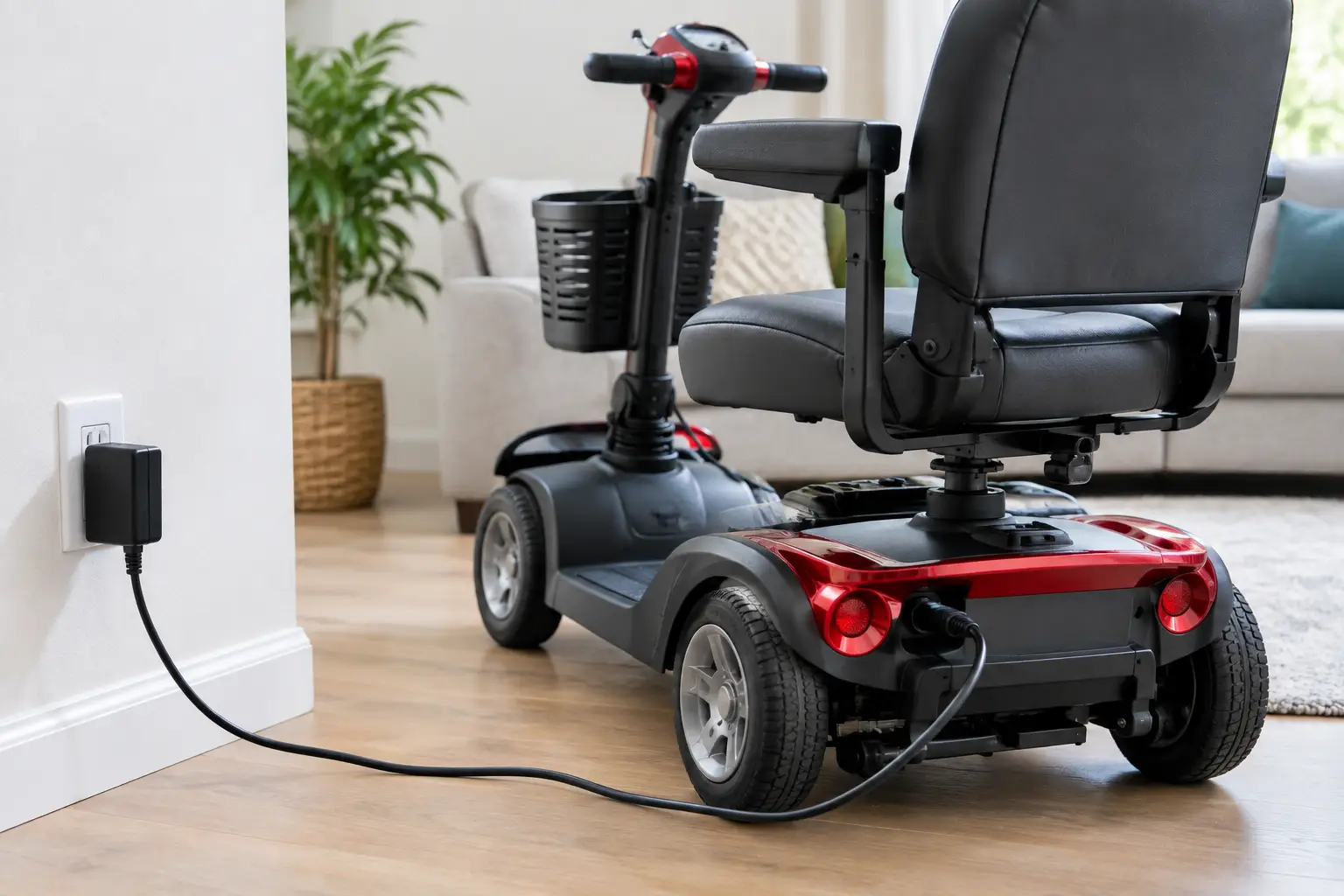
How to Charge a Mobility Scooter Safely at Home
A mobility scooter that runs out of charge halfway through a visit to the shops is frustrating. A battery charged in the wrong place, with the wrong equipment or left unattended, can be a more serious concern. Knowing how to charge a scooter safely gives you or the person you support the confidence to plan journeys, protect the scooter and stay independent.
Most charging routines are straightforward, but the details matter. Your scooter’s handbook and charger instructions should always come first, as charging methods can vary between models and battery types. A few sensible habits can help keep batteries working well and reduce avoidable risks at home.
Start with the right charger and battery
Use the charger supplied with the mobility scooter wherever possible. If it needs replacing, choose one approved for that exact scooter and battery setup. A charger may have a plug that appears to fit while still delivering the wrong voltage or charge profile. This can shorten battery life, cause poor performance or create a safety risk.
Mobility scooters commonly use sealed lead-acid batteries, including AGM or gel types. Some newer or lightweight models use lithium batteries. These batteries have different charging requirements, so do not assume that advice for one type applies to another. In particular, lithium batteries should only be charged with their specified charger and in line with the manufacturer’s guidance.
Before connecting anything, inspect the charger, lead and plug. Do not use equipment with cracked casing, exposed wires, bent pins, a loose connection or signs of overheating. If the scooter has been damaged, dropped or exposed to heavy rain, ask for advice before charging it.
Choose a safe place to charge your scooter
Charge indoors in a dry, well-ventilated area with a working smoke alarm nearby. A garage, utility room or clear area of a ground-floor room can work well, provided it is not damp, excessively cold or directly beside a heat source. Keep the scooter away from radiators, cookers, portable heaters, naked flames and direct sunlight.
Avoid charging in a hallway, on a landing or by a main exit. A scooter, charger lead or battery should never block the route you would need to use in an emergency. It is also wise to keep charging away from bedrooms and living areas where people may be asleep or unable to notice a problem quickly.
The floor should be firm and level, with enough space around the scooter for air to circulate. Do not cover the charger, place coats or bags over it, or store cardboard, cleaning products and other combustible items close by. Battery chargers can become warm during normal use, but they need room to disperse that heat.
A standard wall socket in good condition is usually the best option. Avoid multi-socket adaptors and extension leads unless your scooter manufacturer specifically allows their use. If a lead is unavoidable, it must be fully unwound, suitable for the electrical load and positioned where nobody can trip over it. Never run a charging cable beneath a rug, through a doorway or where it can be crushed by a door, chair or scooter wheel.
How to charge a scooter safely: a simple routine
Park the scooter, switch it off and remove the key before charging. If your model has a freewheel or disengage lever, make sure it is in the normal drive position unless the handbook says otherwise. Charging with the scooter secure helps prevent it moving unexpectedly.
Follow the connection order in the manual. On many mobility scooters, this means connecting the charger to the scooter first, then plugging the charger into the wall socket and switching on at the mains. Other models may specify a different sequence, so the handbook takes priority. Once connected, check the indicator lights on the charger. They should show that power is on and charging has started.
Do not ride the scooter or attempt to move it while it is connected to the charger. Let the charging cycle finish without repeatedly switching the power on and off. When charging is complete, switch off at the mains first if your instructions advise it, then disconnect carefully. Replace the charge-port cover if your scooter has one to help keep moisture and dirt out.
If the charger light stays on red for much longer than usual, flashes unexpectedly, or fails to show a charge at all, stop and investigate rather than leaving it connected. A flat battery, a loose plug, a blown fuse or an ageing battery may be the cause. Repeatedly trying to force a charge is not the answer.
Give the battery enough time, but do not leave it unattended
A full charge often takes between six and 12 hours, depending on the scooter, charger and how low the battery is. Check your handbook for the expected charging time. A reliable routine is to charge after use, during a time when someone is awake and nearby to check on it periodically.
Do not leave a mobility scooter charging overnight, when you are out of the house or when nobody can respond to a warning sign. Modern chargers are designed to manage charging, but they are not a reason to ignore damaged equipment, poor storage conditions or changes in battery behaviour.
If you need a longer charging period because the battery has been heavily used, start early enough for the charger to be disconnected before bedtime. For carers, this may be worth adding to the daily routine, alongside checking that the scooter is parked safely and ready for the next journey.
Watch for warning signs
Stop charging immediately and switch off at the wall if you notice an unusual smell, excessive heat, smoke, hissing, swelling, leaking fluid or discolouration around the charger, plug or battery area. Keep people away from the scooter and do not touch a hot or damaged battery unnecessarily. If there is smoke or fire, leave the area, call 999 and follow the advice of the emergency services.
A battery that is gradually losing range may simply be reaching the end of its useful life. However, a sudden change in charging time, repeated power cuts, erratic charger lights or a scooter that stops sooner than expected deserves attention. Batteries are consumable parts, and replacing worn batteries at the right time can be safer and more economical than waiting for a complete failure.
Never open a sealed battery, add water to it or attempt a home repair. Battery connections should only be handled as described in the handbook or by a competent mobility technician. This is especially relevant if you are unsure which battery type your scooter uses.
Look after the battery between journeys
Regular use and regular charging are generally kinder to scooter batteries than running them completely flat. Try not to wait until the battery gauge is at its lowest point before plugging in. A top-up after a normal outing helps keep the scooter ready for appointments, family visits and everyday errands.
If the scooter will not be used for several weeks, do not simply leave it standing with a partially discharged battery. Check the manufacturer’s storage advice. Many scooters benefit from being fully charged before storage and then recharged at intervals, often every few weeks. The exact schedule depends on the battery type, temperature and model.
Cold weather can reduce available range, while heat can put extra strain on batteries. Store the scooter in a dry, frost-free place where possible. If it is kept in an outdoor store or garage, make sure the conditions are suitable before charging. Bringing a cold or wet scooter straight indoors and connecting it to the mains is not ideal – allow any moisture to dry first.
Keep everyday safety practical
Charging safely should not make owning a mobility scooter feel complicated. The most useful approach is a consistent one: use the correct charger, choose a clear indoor space, stay nearby while charging and act early if anything changes. Keep the handbook somewhere easy to find, especially if more than one family member or carer helps with the scooter.
For replacement batteries, chargers or questions about a scooter’s charging routine, specialist guidance can prevent an expensive mismatch. Mobility Scooters UK Ltd can help customers identify suitable parts and understand the support available for their equipment. A well-charged scooter should be ready when independence calls – whether that is a short trip for milk or a full day out with family.