


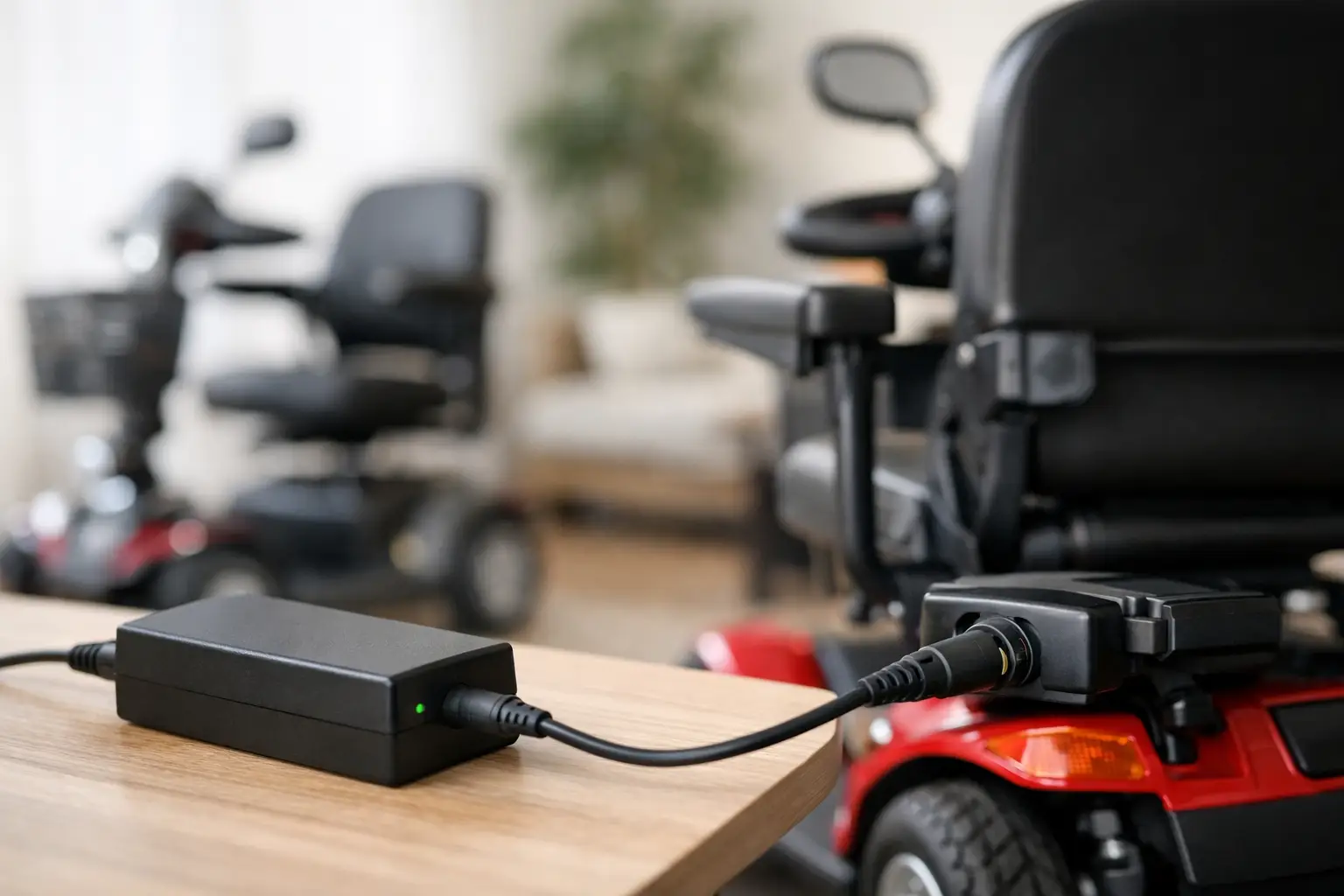
Choosing the Right Mobility Scooter Chargers
A scooter that is ready when you need it makes everyday outings far less complicated. Mobility scooter chargers may be a small part of the kit, but choosing the wrong one can leave you without power, shorten battery life or, in some cases, create a safety risk. The right charger helps your scooter stay dependable for trips to the shops, visits with family and days out.
For many people, a replacement charger is needed because the original has been misplaced, damaged or stopped working properly. It can be tempting to choose one that looks as though it will fit, especially when the connector appears identical. However, compatibility is about much more than the plug. Your scooter and battery need the correct voltage, charging current and connection.
What makes mobility scooter chargers compatible?
The safest starting point is always the charger supplied for your particular scooter model. If you need a replacement, check the information label on the old charger, your scooter manual or the battery compartment. A compatible unit should match the required output voltage and be designed for the type of batteries fitted to your scooter.
Most mobility scooters use two 12-volt batteries connected together to create a 24-volt system. That means they usually require a 24-volt charger. A 12-volt charger may physically connect in some situations, but it will not charge a 24-volt scooter battery system correctly. Using the wrong voltage can result in incomplete charging or damage to batteries and electrical components.
The connector also matters. Some scooters charge through a round three-pin socket on the tiller, while others have a different fitting or are charged directly at the battery box. Never force a plug into place. If it does not connect smoothly, stop and check the specification rather than trying to make it fit.
Check battery type as well as voltage
The majority of scooters use sealed lead-acid batteries, often described as AGM or gel batteries. Chargers for these batteries are widely available, but they are not all interchangeable. Lithium batteries need a charger specifically made for their chemistry and battery management system. A lead-acid charger must not be used with lithium batteries unless the manufacturer clearly confirms it is suitable.
If your scooter has been upgraded with a different battery type, the original charger may no longer be appropriate. This is one of those occasions where a little expert advice can prevent an expensive mistake. Have your scooter make and model, battery voltage, battery type and the details shown on the current charger to hand when asking for help.
Choosing the right charging current
A charger’s output is normally shown in amps, such as 2A, 4A or 5A. This affects how quickly it charges the batteries, but faster is not automatically better. The suitable charging current depends on the battery capacity, the scooter’s design and the battery manufacturer’s guidance.
Smaller travel and car-boot scooters often use lower-capacity batteries and are commonly paired with a lower-amp charger. Larger pavement, road-capable or all-terrain scooters may have bigger batteries that can accept a higher charging current. A charger that is too low-powered may take a very long time to recharge the scooter. One that is too powerful may cause excessive heat or reduce the service life of batteries that are not designed for it.
A good-quality automatic charger is particularly helpful. It reduces its output as the batteries approach full charge and switches to a maintenance or float stage once charging is complete. This helps avoid overcharging, although it is still wise to follow the instructions supplied with your scooter and charger.
How to charge your scooter safely at home
Charging should be a calm, regular part of owning a scooter, not something left until the battery gauge is close to empty. After regular use, many owners charge their scooter overnight in a dry, well-ventilated place. This gives the batteries time to recharge fully without disrupting the next day’s plans.
Park on a level surface, switch the scooter off and remove the key before connecting the charger. Plug the charger into the scooter first if your manual advises this, then connect it to the mains. Keep the charger away from water, direct heat and anything that could cover its ventilation slots. Avoid extension leads where possible. If one is genuinely necessary, it should be suitable for indoor use and fully unwound.
Do not charge a scooter in a hallway, on an escape route or beside flammable materials. The charging area should be somewhere you can access safely and where the cable will not create a trip hazard for you, a relative or a carer. If your scooter is stored in a shed or garage, make sure it remains dry and protected from very cold conditions.
A charging light normally shows red, amber or orange while charging and green when the batteries are full, though indicators differ by model. If the light behaves differently from usual, consult the charger’s instructions. Repeated flashing lights, no light at all, a burning smell or an unusually hot charger should be treated as warning signs. Disconnect from the mains if it is safe to do so, and do not keep using the unit until it has been checked.
Habits that help batteries last longer
Scooter batteries gradually lose capacity with age, but sensible charging makes a meaningful difference. Letting lead-acid batteries run completely flat on a regular basis is particularly hard on them. Charge after use, especially after longer journeys, rather than waiting until the scooter becomes sluggish.
If you use your scooter only occasionally, charge it according to the manufacturer guidance, often at least once every few weeks. Batteries naturally lose charge when standing still. A scooter left unused through winter with flat batteries may not be ready when spring arrives, even if the charger itself is working perfectly.
Cold weather can also reduce available range. This does not always mean the batteries have failed, but it is a reason to plan shorter journeys, recharge promptly and store the scooter somewhere sheltered. Battery age, user weight, hills, tyre condition and frequent stops all affect range, so a shorter journey between charges is not always caused by the charger.
When a charger needs replacing
A replacement may be needed if the power cable is split, the plug is bent, the casing is cracked or the indicator lights no longer operate normally. A charger that cuts out repeatedly, stays on charge indefinitely or becomes excessively hot also deserves attention. Do not attempt a home repair to internal electrical parts.
Before replacing a charger, rule out a battery problem. Old batteries may no longer hold their charge, so even a fully working charger cannot restore the scooter’s usual range. Corroded battery terminals, loose connections and a damaged charging socket can produce similar symptoms. If your scooter is several years old and has become noticeably less reliable, a battery and charging-system check is often more useful than buying a charger based on guesswork.
It is also worth being cautious with very cheap, unbranded chargers. The initial saving can disappear quickly if the charger does not suit your batteries or fails early. A charger selected for your scooter’s make, battery setup and connector offers better reassurance, particularly when the scooter is essential for your independence.
A simple way to buy with confidence
Before ordering, confirm four details: your scooter make and model, the battery type, the battery system voltage and the connector style. If you still have the old unit, photograph or write down its label, including output voltage and amps. This makes it much easier to compare like for like.
Mobility Scooters UK Ltd can help customers and carers identify suitable chargers and replacement parts for recognised mobility brands. Asking before you buy is especially worthwhile if the scooter has had replacement batteries, an altered battery box or a non-standard charging connection.
A dependable charger quietly supports every journey your scooter makes. Keep the correct one in a dry, safe place, charge regularly and ask for guidance whenever the label or fitting leaves room for doubt. That small check can help keep your next outing comfortably within reach.