

Three Wheel Scooter Comparison: Find Your Fit
A scooter can turn a tiring trip around the shops, a visit with friends or a walk through the park back into part of everyday life. This three wheel scooter comparison is designed to help you decide whether a three-wheel model suits your routine better than a four-wheel scooter, without getting lost in technical terms.
Three-wheel mobility scooters are valued for their tight turning circle and open, comfortable seating position. They can be an excellent choice, but the right answer depends on where you will use it, how you travel and what gives you the greatest confidence while moving around.
Three Wheel Scooter Comparison: The Main Difference
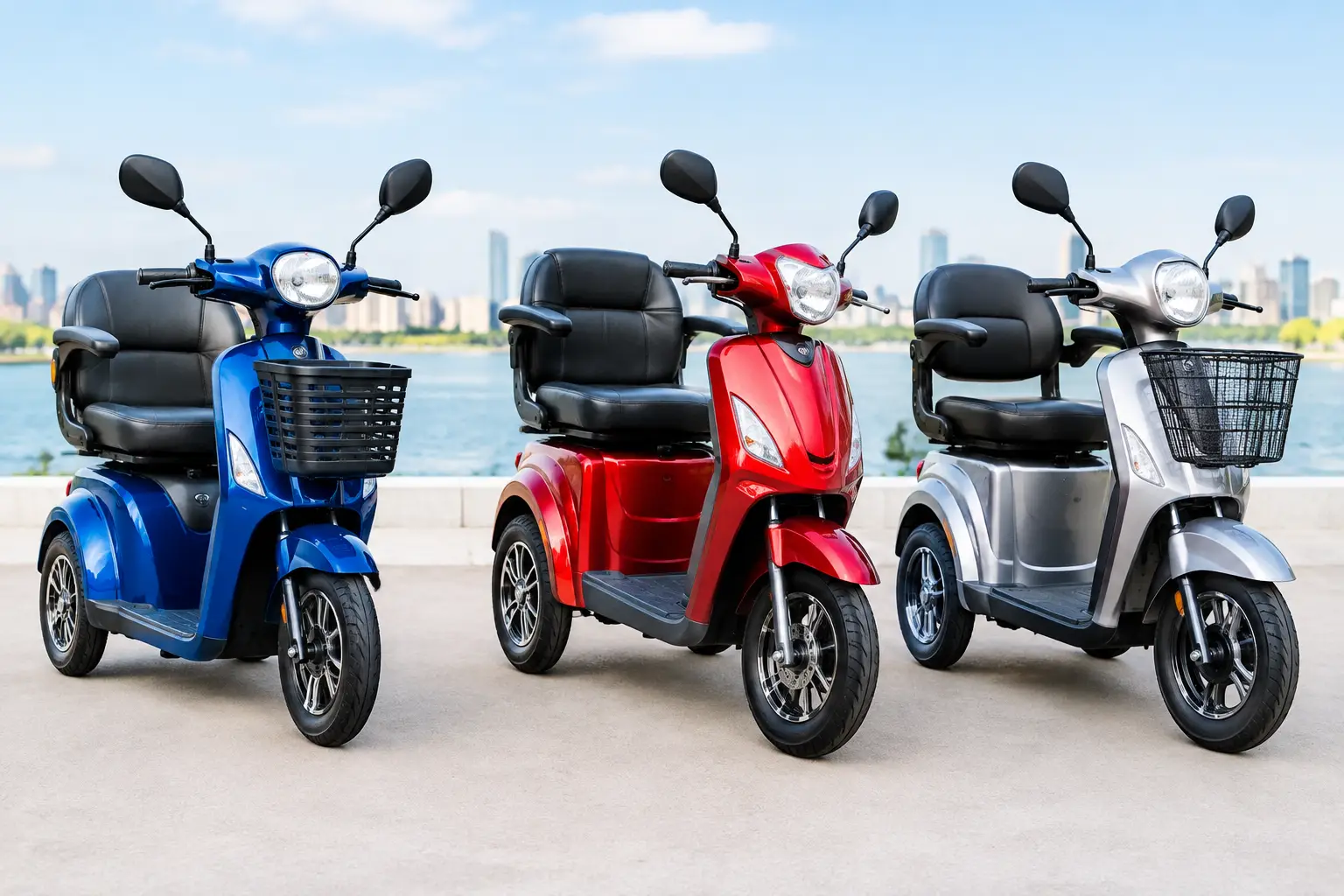
The most obvious difference is at the front. A three-wheel scooter has one wheel at the front and two at the rear, while a four-wheel scooter has two wheels at both the front and rear. That extra front wheel changes the way the scooter turns and feels over uneven ground.
With one front wheel, a three-wheel scooter can steer through a tighter space. This is particularly useful in supermarkets, shopping centres, sheltered accommodation, wider hallways and other places where there are corners to negotiate. Many users also find the footwell feels less restricted because there are no front wheel arches on either side.
A four-wheel model generally offers a wider base at the front. This can feel more planted when travelling outdoors, crossing uneven paving or taking a gentle slope. Neither layout is automatically better. The sensible choice comes down to your regular journeys, your confidence and the terrain near your home.
When a Three-Wheel Scooter Is a Good Choice
For someone who mainly uses a scooter on smooth pavements, in shops and around local amenities, a three-wheel scooter can make day-to-day outings simpler. The smaller turning circle means less reversing and repositioning when entering a lift, moving around display stands or lining up at a café table.
Three-wheel scooters are available in several sizes. Compact travel models can be useful for shorter trips and may break down into manageable sections for car transport. Larger pavement and road-capable scooters can offer a more generous captain’s seat, suspension, lights and longer battery range for regular outdoor use.
The open front area is another genuine benefit. If you have stiff knees, limited hip movement or simply prefer more room to place your feet, getting on and off may feel easier. A swivel seat, adjustable armrests and a tiller that can be positioned closer to you can make a bigger difference to comfort than wheel number alone.
They are often a strong fit when manoeuvrability is your priority. Someone living near a high street, for example, may benefit more from easy turning around shops than from the extra front-end stability of a four-wheel machine.
Where Four Wheels May Suit You Better
If your usual route includes broken pavements, cobbles, cambered paths, grass or gravel, a four-wheel scooter is often worth considering. Its broader stance can provide added reassurance, especially for users who feel nervous about changing surfaces or who need a sturdier-feeling ride.
This does not mean a three-wheel scooter is unsafe outdoors. A quality model used within its stated limits can be very capable. However, the user should slow down for turns, avoid steep side slopes where possible and take care at dropped kerbs. The key is choosing equipment that matches the ground it will meet most often, rather than buying around one occasional journey.
A four-wheel scooter may also feel more suitable if you want a larger all-terrain or road-capable model for longer rural or suburban journeys. These scooters are usually less nimble indoors, so it is wise to measure gates, paths, shed doors and storage areas before ordering.
Compare the Journey, Not Just the Scooter
A useful way to make the decision is to picture a normal week. Think about the route from your front door to the pavement, the surface outside, where you park at the shops and whether the scooter needs to fit in a car boot. These practical details matter more than a long specification sheet.
Start with turning space. Measure narrow points at home, including doorways, hall corners and the space where you plan to store or charge the scooter. Check the scooter’s overall width and turning circle, not just whether it looks compact in a photograph. A three-wheel design can be very helpful indoors, but a larger three-wheel road scooter will still need enough room to turn.
Next, consider range realistically. Battery range is influenced by user weight, gradients, cold weather, tyre condition and how often the scooter stops and starts. If a journey is close to a model’s advertised maximum range, choose a scooter with more capacity rather than hoping every charge will achieve the headline figure. This leaves room for detours and gives greater peace of mind on the way home.
Weight capacity deserves the same attention. Always include clothing, shopping, bags and any accessories when comparing the stated maximum user weight. Choosing a scooter with suitable capacity supports safe, reliable performance and may make the ride more comfortable.
Comfort Can Change How Often You Use It
A scooter that is technically suitable but uncomfortable is likely to stay at home. If you expect to use yours for more than brief trips, look closely at the seat, suspension and controls.
A supportive, adjustable seat can reduce fatigue on longer outings. Armrests should be at a comfortable height and wide enough for easy transfers. A rotating seat may help if you find it difficult to twist while getting on or off. For some people, a higher seat is easier to rise from, while others feel safer with a lower seating position.
Try the controls in your mind as well. Can you comfortably reach the tiller? Are the speed dial, lights and indicators straightforward to use? A delta-style handlebar can be a good option for people with reduced grip strength or hand pain, as it allows control with either hand and does not require a tight grasp.
Suspension is particularly worthwhile for frequent outdoor use, but it is not a substitute for choosing the correct scooter type. A compact three-wheeler with suspension may still be less appropriate for rough paths than a larger four-wheel model built for varied surfaces.
Transport, Storage and Charging
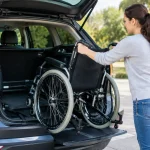
Many first-time buyers understandably focus on the scooter itself, then discover that lifting, storing and charging need just as much planning. If you want to take your scooter in a car, check its heaviest individual part after dismantling, rather than only the total product weight. A car-boot hoist or vehicle-mounted solution may be more suitable if lifting is difficult.
Folding scooters can be convenient for travelling and storing, although they may have a smaller seat, shorter range or less suspension than a larger model. They suit some lifestyles brilliantly, but they are not always the best option for a person who wants substantial comfort on daily outdoor journeys.
At home, charge the scooter in a dry, ventilated place with access to a suitable mains socket. Avoid leaving batteries flat for long periods, particularly over winter. You will also need a secure storage space that protects the scooter from rain and allows you to move it in and out without a difficult threshold or tight turn.
Pavement and Road Use in the UK
In the UK, mobility scooters fall into different classes. Class 2 scooters are designed for pavement use and have a maximum speed of 4 mph. Class 3 scooters can travel up to 8 mph on the road, where permitted, and must be registered with the DVLA. They must also have the required road equipment, such as lights, indicators, a horn and rear-view mirror.
A Class 3 scooter must be limited to 4 mph on pavements and other pedestrian areas. It cannot be used on motorways, in bus lanes or on cycle-only lanes. Before choosing a road-capable three-wheel scooter, consider whether your local roads have safe crossings, suitable dropped kerbs and routes you would feel comfortable using. Road capability is useful only when it supports a journey you can make confidently.
Questions Worth Asking Before You Buy
A good purchase is not just about finding a low price. Ask whether the model is suitable for your height and weight, the distances you expect to cover and the surfaces around your home. Check what is included, whether a basket, canopy or weather cover would help, and how warranty, servicing and replacement parts are handled.
It is also sensible to speak with a mobility specialist if you are unsure. At Mobility Scooters UK Ltd, practical advice is available to help customers and carers compare recognised brands and choose a model around real daily needs, from car-boot travel to more substantial outdoor use.
The best scooter is the one that makes leaving the house feel achievable again. If a three-wheel model gives you the room, turning ability and comfort to use it regularly, it can be a wonderfully freeing choice. If your routes demand a wider, steadier stance, choosing four wheels is just as positive a step towards safer, more independent days.