


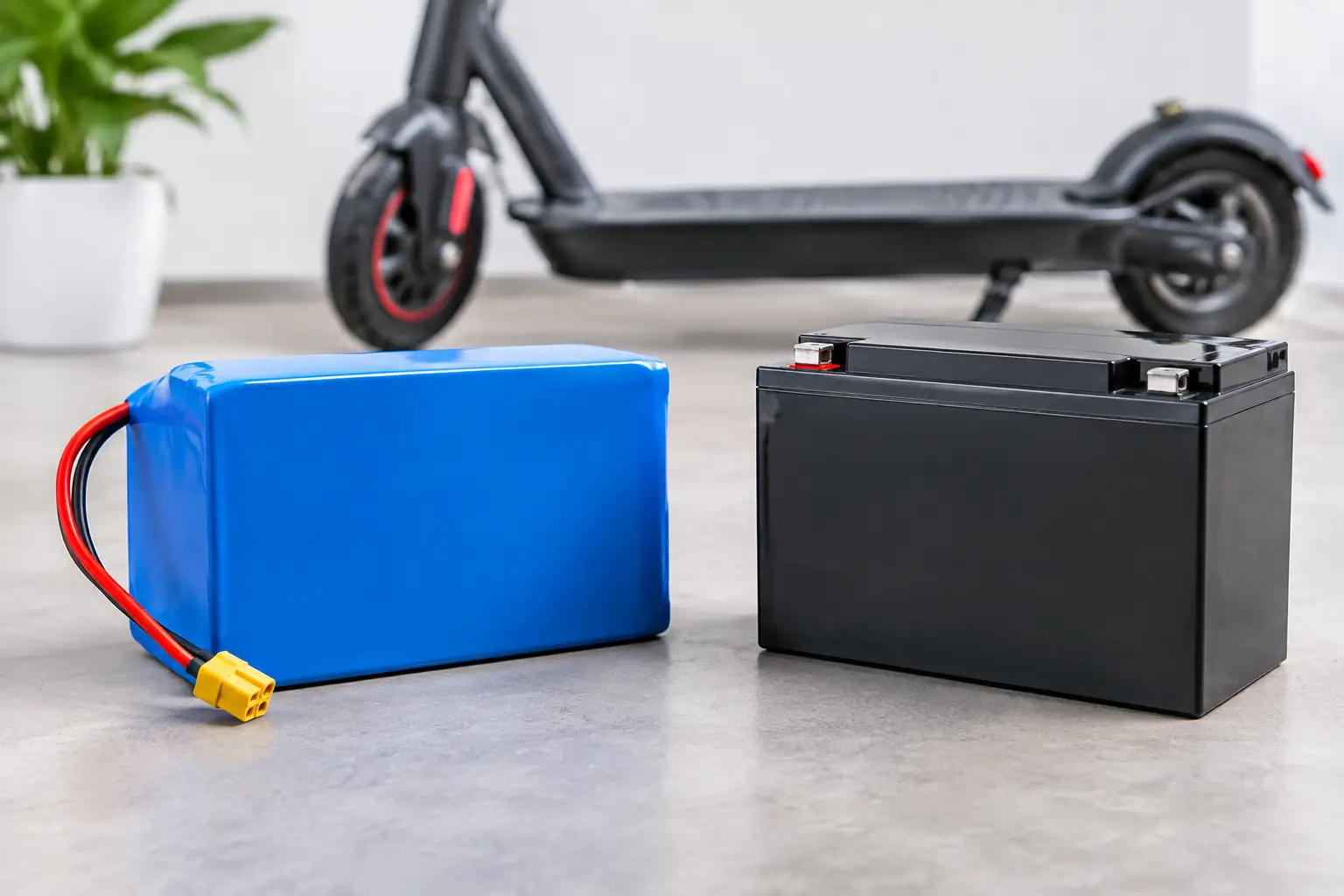
Lithium Versus Lead Scooter Batteries Compared
A mobility scooter battery affects far more than the number of miles shown on a specification sheet. It can change how easy your scooter is to lift into a car, how often it needs charging and how confident you feel setting off for the shops or visiting family. When comparing lithium versus lead scooter batteries, the right choice depends on your scooter, your routine and the budget you are comfortable with.
Lead-acid batteries have powered mobility scooters reliably for many years and remain a sensible option for plenty of users. Lithium batteries are lighter, longer-lasting and increasingly popular, particularly for travel and boot scooters. They are not, however, a simple like-for-like upgrade for every model.
Lithium versus lead scooter batteries: the key difference
The main difference is the battery technology. Most traditional mobility scooters use sealed lead-acid batteries, usually AGM or gel types. They are designed to be maintenance-free, with no need to top up fluid, and are fitted as a pair on many scooters.
Lithium batteries use a different cell design and usually include a battery management system. This built-in protection helps manage charging, temperature and power output. A lithium battery can store useful energy at a much lower weight than an equivalent lead battery, which is why it is particularly attractive for compact and portable scooters.
Neither type is automatically better in every situation. A dependable lead battery may be the best-value replacement for a larger pavement scooter used locally. A lithium battery can make much more sense if lifting battery boxes has become difficult or if a lightweight travel scooter is regularly taken in the car.
Weight and portability
For many customers, weight is the deciding factor. Lead batteries are heavy. Even a small battery box can be awkward to lift, especially when it needs to be removed from a scooter for car transport or indoor charging. Larger scooters may use two substantial batteries, making removal a two-person job for some people.
Lithium batteries are considerably lighter for the power they provide. This can make a real difference to the daily practicality of a folding or dismantling scooter. Less lifting can mean less strain on hands, shoulders and backs for both users and carers.
It is worth looking beyond the battery alone. The overall weight of the scooter, the heaviest component after dismantling, and whether it fits your car boot still matter. A lighter battery will help, but it does not turn every scooter into an easy-lift travel model.
Range, performance and everyday confidence
Battery range is affected by more than battery type. User weight, hills, cold weather, tyre condition, surface, stop-start journeys and the age of the battery all influence how far a scooter can travel on one charge.
Lithium batteries often provide more usable capacity during a journey. They tend to hold their voltage more steadily, so a scooter may feel more consistent as the battery level falls. They also recharge more efficiently than lead-acid batteries in many cases.
Lead batteries can still provide dependable range when they are correctly sized, charged and cared for. For regular short journeys on level pavements, a good-quality set may offer everything a user needs. The most useful question is not simply, “Which battery has the highest range?” It is, “How far do I genuinely travel between opportunities to charge?”
Avoid choosing a battery based on the maximum claimed range alone. Leave a comfortable reserve for detours, hills and colder days. If you often return home with the battery gauge low, a larger-capacity battery or a scooter better suited to your journeys may be safer than relying on a battery upgrade alone.
Upfront cost and long-term value
Lead-acid batteries are usually cheaper to buy. This makes them an accessible choice when replacing worn-out batteries, particularly on older or less frequently used scooters. They are widely available in common sizes and are familiar to most mobility scooter owners.
Lithium batteries cost more at the outset, sometimes considerably more. Their longer service life can make that cost worthwhile for people who use their scooter frequently, charge it often or want to reduce the effort of battery handling. A lithium battery that lasts several years longer may offer better value over time, but only if it is compatible with the scooter and looked after correctly.
For an occasional user, the financial case can be different. If a scooter is used for a short trip once or twice a week, a quality lead battery may be the more proportionate choice. Paying extra for lithium is most compelling where its lighter weight and longer lifespan solve a genuine daily problem.
Charging: do not mix chargers and batteries
This is the most important practical point. Lithium and lead batteries require different charging profiles. A charger supplied for a lead-acid battery should not be used with a lithium battery unless the manufacturer has specifically confirmed it is suitable. The same applies in reverse.
Using the wrong charger can reduce battery life, cause charging faults or damage the battery management system. A safe conversion may need a compatible charger, suitable cabling and confirmation that the scooter’s electronics can work correctly with the new battery.
Lead batteries benefit from regular charging, including after short trips. If the scooter is not being used, charging it routinely helps prevent the battery from being left discharged for long periods. Letting a lead battery run flat can permanently reduce its capacity.
Lithium batteries are generally more forgiving when stored, but they should still be checked and charged in line with the battery maker’s instructions. Both battery types should be charged in a dry, well-ventilated place, away from direct heat and with the correct charger. Do not charge a damaged battery, a battery with swollen casing or one that has an unusual smell.
Cold weather and storage
British winter weather is hard on any mobility scooter battery. Cold temperatures reduce available range, and damp conditions can contribute to electrical problems if a scooter is left outdoors without suitable protection.
Lead batteries can be charged in cold conditions, although performance will be reduced until temperatures improve. Lithium batteries can provide good power in cooler weather, but many must not be charged below a specified low temperature. Their management system may prevent charging until the battery has warmed up, which is a safety feature rather than a fault.
If possible, store the scooter and battery in a dry garage, shed or indoor space that stays above freezing. For longer periods without use, follow the storage guidance for your particular battery. This is especially useful over winter or before an extended holiday.
Is lithium compatible with your mobility scooter?
Do not assume that a lithium battery with the same voltage will fit or work safely. Battery size, terminal layout, capacity, cable connections, charger requirements and the scooter’s controller all need checking. Some scooters are designed specifically for lithium power, while others are intended only for lead-acid batteries.
A replacement must also sit securely in its battery compartment. A loose battery can damage terminals or wiring when travelling over uneven ground. On larger Class 3 road scooters, changing the battery arrangement without expert advice may affect performance or reliability.
Before purchasing, check the scooter handbook and the existing battery label. Note the voltage, amp-hour rating, dimensions and terminal type. If you are unsure, specialist advice is worthwhile. Mobility Scooters UK can help customers consider suitable replacement options for their scooter and how they use it.
Which battery type is right for you?
A lead-acid battery is often the sensible choice if you want an affordable, straightforward replacement for a compatible scooter, use it mainly for local journeys and do not need to remove the batteries regularly. It remains a proven option for everyday independence.
Lithium may be the better choice if reduced lifting is a priority, you own a travel scooter, you use your scooter frequently or you want a battery that can offer a longer working life. The higher purchase price needs to be balanced against those practical benefits.
The best battery is the one that suits your scooter and makes your usual journeys feel less demanding. A little care in checking compatibility now can help you enjoy reliable trips to the shops, appointments and visits with far greater peace of mind.