

Best Wheelchair Cushions for Pressure Relief
A wheelchair cushion can make the difference between getting through the day and needing to cut it short because sitting has become painful. The best wheelchair cushions for pressure relief are not necessarily the thickest or most expensive. They are the cushions that suit the user, fit the chair correctly and provide reliable support for the amount of time they spend seated.
For wheelchair users and carers, comfort is about far more than a softer seat. Good pressure management can help protect vulnerable skin, improve posture and make everyday activities – from eating at the table to shopping or visiting family – feel more manageable. The right choice depends on mobility, body shape, skin condition, balance, the wheelchair itself and whether the cushion will be used mainly at home, outdoors or while travelling.
What pressure relief means in a wheelchair cushion
When someone remains in one position for a long time, pressure builds over bony areas, particularly around the pelvis and tailbone. If that pressure is not regularly relieved, it can reduce blood flow to the skin and underlying tissue. This may lead to discomfort, redness or, for people at higher risk, pressure sores.
A pressure-relieving cushion spreads the user’s weight across a wider area and helps reduce concentrated pressure. Some cushions also support a more stable sitting position, which can stop a person gradually sliding forwards or leaning to one side. That matters because poor posture can create extra pressure and make transfers, self-propelling and daily tasks harder.
A cushion is only one part of good pressure care. Regular position changes, checking the skin, keeping the wheelchair correctly adjusted and seeking clinical advice where there is reduced sensation or a history of pressure damage remain essential. If there is persistent redness, broken skin or pain that does not settle after pressure is removed, contact a GP, district nurse or tissue viability professional promptly.
The best wheelchair cushions for pressure relief by type
There is no single best material for everyone. Each cushion type has strengths, limitations and a different feel when sitting on it.
Foam cushions: practical support for everyday use
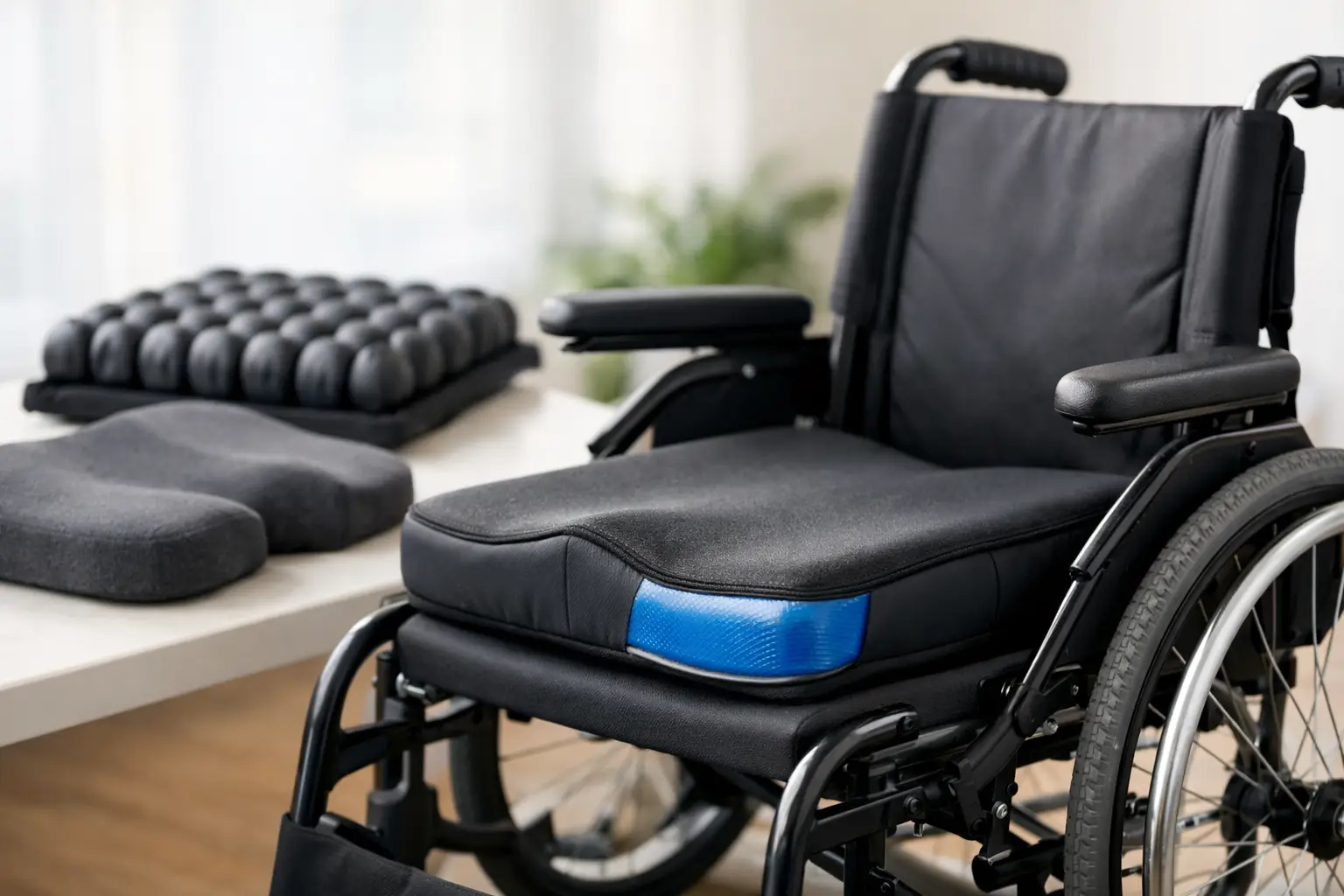
High-density foam cushions are a popular starting point for people who need more comfort than a standard wheelchair seat provides. They are generally lightweight, straightforward to handle and available at a more affordable price than many specialist alternatives.
A well-made contoured foam cushion can support the thighs and pelvis, encourage a more even sitting position and offer moderate pressure redistribution. It may suit users who spend shorter periods in their chair, have a lower assessed risk of pressure damage or want a comfortable cushion for occasional outings.
The trade-off is that basic foam can compress over time. Very soft foam may feel pleasant at first but may not provide enough support, while a cushion that has flattened should be replaced rather than relied upon. Look for resilient, high-density foam and a removable cover that can be washed easily.
Gel cushions: stable, supportive and often cooler
Gel wheelchair cushions use gel inserts, sometimes combined with foam, to help distribute weight and reduce pressure around the sitting bones. Many users like their stable feel, particularly if they find air cushions too mobile or need support to maintain an upright position.
Gel can be a sensible option for longer daily sitting, but cushion weight is worth considering. A heavier cushion can make folding or lifting a wheelchair more difficult, especially for a carer managing transport. Gel inserts can also feel firmer in colder weather, so the overall construction and cover make a difference to comfort.
Air-cell cushions: adaptable pressure management
Air cushions use interconnected air cells that move with the user’s body. They can provide very effective pressure redistribution for people at higher risk, particularly when correctly inflated and assessed for their needs.
Their adjustability is a key benefit, as the amount of air can be changed to suit the individual. However, that same feature means they require more attention. Overinflation can leave the user sitting too high and feeling unstable, while underinflation may reduce support or allow the user to bottom out. Air cushions also need routine checks for punctures, valve condition and correct inflation.
For anyone with an existing pressure sore, very fragile skin, reduced sensation or complex postural needs, an air cushion should usually be selected with guidance from an occupational therapist, wheelchair service or other qualified clinician.
Memory foam and layered cushions: comfort with a balanced feel
Memory foam moulds gradually to the body and can feel particularly comfortable for users who experience general aching or need a gentler surface. It is often combined with firmer support foam to avoid the sinking feeling that can make transfers difficult.
Layered cushions can offer a useful middle ground: a supportive base for stability with a softer upper layer for comfort. They are not automatically suitable for high-pressure-risk users, but a quality layered design may work well for regular home use or a self-propelled wheelchair where a low, stable seating position is important.
Fit matters as much as the cushion material
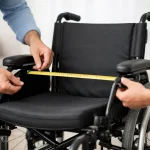
Even an excellent cushion will not work as intended if it is the wrong size. Measure the usable width and depth of the wheelchair seat rather than guessing from the chair’s overall dimensions. The cushion should sit flat inside the seat, without curling at the edges or pushing against the armrests.
A cushion that is too narrow can leave the thighs unsupported. One that is too wide may distort the sides, interfere with armrests or make transfers awkward. A cushion that is too deep can press behind the knees, while one that is too short may not support the full length of the thighs.
Height also deserves attention. Adding a thick cushion raises the user in the wheelchair. This can affect footrest position, knee angle, access under tables and the reach needed to propel the chair. It may also alter whether the user can transfer safely. If a person suddenly seems less stable after adding a new cushion, the wheelchair setup may need reviewing rather than assuming the cushion is unsuitable.
Choosing for daily life, not just the diagnosis
The best choice starts with how the wheelchair is actually used. Someone who uses a lightweight chair for a few hours on local trips may prioritise a compact foam cushion that is easy to carry. A person seated for most of the day may need more advanced pressure distribution, a breathable cover and a cushion that can be checked and maintained easily.
Consider these practical questions before buying:
- How many hours a day is the person usually seated?
- Can they shift their weight independently, or do they need help to reposition?
- Is there reduced feeling, fragile skin or a previous pressure sore?
- Will the cushion need to fit a folding chair, be removed for car journeys or cope with outdoor use?
- Does the user need extra help with posture, balance or preventing forward sliding?
For a higher-weight user, check both the wheelchair and cushion weight limits. Bariatric cushions are designed for greater load capacity and may offer a wider, more supportive surface. Choosing within the stated limit is a safety issue as well as a comfort consideration.
Covers, heat and everyday upkeep
The cover is not a minor detail. A breathable, stretch cover helps the cushion work properly and can reduce heat and moisture build-up. A waterproof or incontinence-resistant cover may be useful, but it should not make the surface hot, slippery or noisy. In many cases, a breathable cover with a separate protective layer offers a better balance.
Check the cushion daily for damage, loss of shape, dampness or a cover that has become loose. Follow the cleaning instructions, particularly for gel and air cushions, as harsh cleaning products can damage materials. If the cushion has straps or a non-slip base, make sure it is secured before every journey. A cushion that shifts during a transfer can create a real risk of slipping.
When specialist assessment is the right next step
Off-the-shelf cushions can be a helpful and affordable solution for many wheelchair users. However, a specialist assessment is strongly recommended when there is a current or previous pressure ulcer, significant asymmetry, uncontrolled leaning, marked pain when seated or a need to remain in the chair for prolonged periods.
An occupational therapist or wheelchair seating professional can assess posture, pressure risk and the relationship between the cushion, back support, footrests and wheelchair dimensions. This can prevent the frustration and cost of trying several unsuitable cushions.
Mobility Scooters UK understands that choosing seating support can feel like a lot to weigh up, especially when buying for a parent, partner or person you care for. Start with a cushion that matches the user’s daily routine and chair dimensions, then keep comfort under review. The right support should help the person spend less time thinking about their seat and more time enjoying the independence their wheelchair provides.