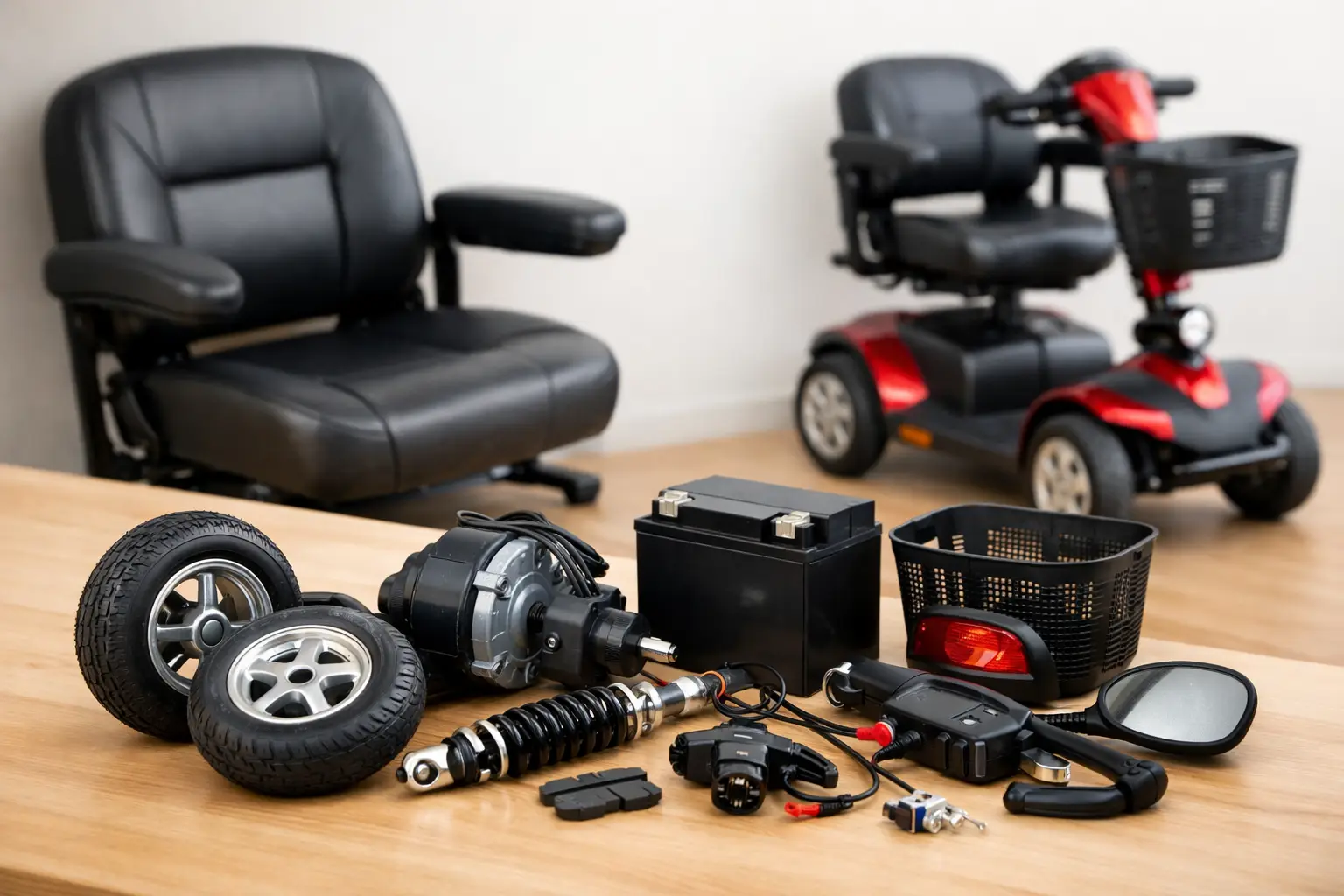
Mobility Scooter Spare Parts Worth Replacing
A scooter that has become part of your daily routine should not be sidelined by a worn tyre, weak battery or misplaced charger. The right mobility scooter spare parts can restore the comfort, reliability and confidence you need to get to the shops, visit friends or enjoy time outdoors without unnecessary disruption.
Not every fault means a scooter needs replacing. Many common issues can be resolved with a compatible part, provided it is selected for your exact make and model and fitted safely. Knowing what tends to wear out, and when to seek advice, makes it easier to protect both your scooter and your independence.
Start with the scooter model, not the part
Mobility scooters can look similar while using very different batteries, chargers, tyres, control panels and fittings. A part designed for one model may not connect correctly or perform safely on another, even if the dimensions appear close.
Before ordering, check the scooter’s make, model name and serial number. These details are often found on the chassis label, usually beneath the seat, around the battery compartment or on the frame. It is also helpful to note the age of the scooter and take a clear photograph of the existing part where possible.
This matters particularly for electrical items. Using the wrong charger can damage batteries or shorten their life, while an incompatible controller or wiring component can affect how the scooter starts, stops and responds. If you are unsure, asking a mobility specialist before buying is the sensible route.
Batteries and chargers: the parts that keep you moving
For many owners, the battery is the first replacement to consider. Mobility scooter batteries gradually hold less charge over time. You may notice that journeys are becoming shorter, the battery indicator drops quickly, or the scooter seems slower on hills. These are signs that the batteries may no longer be performing as they should.
Most scooters use sealed, maintenance-free batteries, commonly sold as a matched pair. Replacing only one battery in a pair can create an imbalance, because the older battery may limit the performance of the new one. In most cases, fitting two new batteries together is the better value and more dependable choice.
Battery life depends on how the scooter is used and stored. Regular charging, avoiding deep discharge and keeping the scooter somewhere dry and protected from extreme cold can all help. A scooter left unused for long periods still needs charging according to its handbook, as neglected batteries can lose capacity permanently.
Chargers deserve the same attention. If the charging light does not behave as usual, the connection feels loose, the lead is damaged or the charger becomes unusually hot, stop using it and arrange a replacement or inspection. A genuine or correctly specified compatible charger is not simply a convenience – it helps protect an expensive battery set and supports safe, predictable charging.
Tyres, wheels and puncture protection
Tyres affect grip, comfort and braking, especially on wet pavements, uneven paths and dropped kerbs. Worn tread, cracking sidewalls, repeated punctures or a tyre that will not stay inflated are all good reasons to act promptly.
Pneumatic tyres provide a more cushioned ride and can be particularly welcome on rougher surfaces. They do, however, need their pressure checked regularly and can puncture. Solid tyres remove the risk of punctures and require less day-to-day attention, but may give a firmer ride. The best option depends on the scooter model and where it is used most often.
Do not ignore a pulling sensation, vibration through the handlebars or uneven tyre wear. These can point to a wheel, tyre or alignment issue. Continuing to use the scooter in this condition may make steering less comfortable and could place added strain on other components. A qualified technician can advise where the issue is not clearly limited to the tyre itself.
Mobility scooter spare parts for comfort and visibility
Some replacements are less about getting the scooter running and more about making every journey feel safer and more comfortable. Seats, arm pads, backrests, baskets, mirrors, weather covers and canopy fittings all receive regular use and can become worn, loose or damaged.
A torn seat cover or flattened cushion can make a short trip tiring. Damaged armrests can reduce support when getting on and off the scooter. If your scooter has adjustable settings, check whether the seat position and armrest height still suit you before replacing parts. Sometimes a small adjustment improves comfort; sometimes a new component is the right answer.
Mirrors, lights, indicators and reflectors should be kept in good condition, particularly for anyone using a road-capable scooter or travelling in lower light. A cracked mirror or faulty indicator may seem minor, but good visibility helps you make safer decisions around pedestrians, driveways and traffic.
Baskets and storage bags are also worth replacing when their fittings are loose or their structure is damaged. Shopping, medication and personal belongings should be carried securely, without affecting the steering column or creating a trip hazard when boarding the scooter.
Controls, keys and smaller replacements
A missing key can quickly stop a scooter being useful, while a damaged key switch, throttle control, speed dial or horn button should never be treated as a minor inconvenience. These are operating controls, so correct diagnosis matters.
Replacement keys may be available for some scooters, but they are not always universal. The key number, model details and proof of ownership may be needed. Avoid forcing a key that does not turn smoothly, as this can cause further damage to the ignition barrel.
Smaller items such as fuses, bulbs, plugs, charging sockets and battery straps can also need replacement. They can be straightforward components, but the cause of the failure is just as relevant as the part itself. For example, a repeatedly blown fuse may indicate an electrical fault rather than a simple need for more fuses.
When a replacement part is not a home repair
There are jobs that confident owners or carers may manage, such as replacing a basket, mirror, seat cover or correctly matched battery. Even then, follow the scooter handbook and make sure the scooter is switched off before starting work.
Electrical repairs, brake adjustments, tyre changes on larger models, control-box faults and anything involving wiring are best left to a trained mobility technician. This is especially true if the scooter cuts out unexpectedly, will not stop smoothly, smells of overheating, shows a warning code or has been involved in an impact.
A professional service can identify wear that is not obvious from the outside. Brakes, bearings, suspension, steering and electrical connections all need to work together. Replacing one visible part without checking the wider cause may only delay the problem.
Make parts replacement part of regular care
A few simple checks can help you spot issues before they interrupt an important journey. Keep the scooter clean and dry, check tyres for wear, ensure lights and indicators work, and listen for new rattles or squeaks. Charge the batteries as recommended, and avoid storing the scooter in a damp shed or exposed outdoor space where possible.
Keep a note of servicing dates, battery replacement dates and any parts fitted. This gives you a clearer picture of how the scooter is performing and can be useful when speaking to a specialist. It also helps carers and family members support safe use without needing to guess what has been changed.
At Mobility Scooters UK Ltd, practical advice is available for customers who need help identifying compatible parts for recognised scooter brands. A little care in choosing the correct replacement can keep a familiar scooter comfortable, safe and ready for the everyday places that matter to you.
If something on your scooter no longer feels right, trust that instinct. Dealing with a small issue early is often the simplest way to protect the freedom your scooter gives you.