

Are Enclosed Mobility Scooters for Winter Worth It?
A cold, wet morning can turn a familiar trip to the shops, pharmacy or local café into something to put off. Enclosed mobility scooters for winter are designed to make those journeys feel more comfortable and dependable, with a covered cabin that provides far more protection than an open scooter and canopy alone.
For many people, this is not just about avoiding rain. It is about keeping the freedom to get out, see people and manage everyday errands when the temperature drops. An enclosed scooter can be a valuable investment, but it is a larger, heavier and more specialised type of vehicle. The right choice depends on where you travel, where it will live and how you need to use it day to day.
What makes an enclosed scooter different?
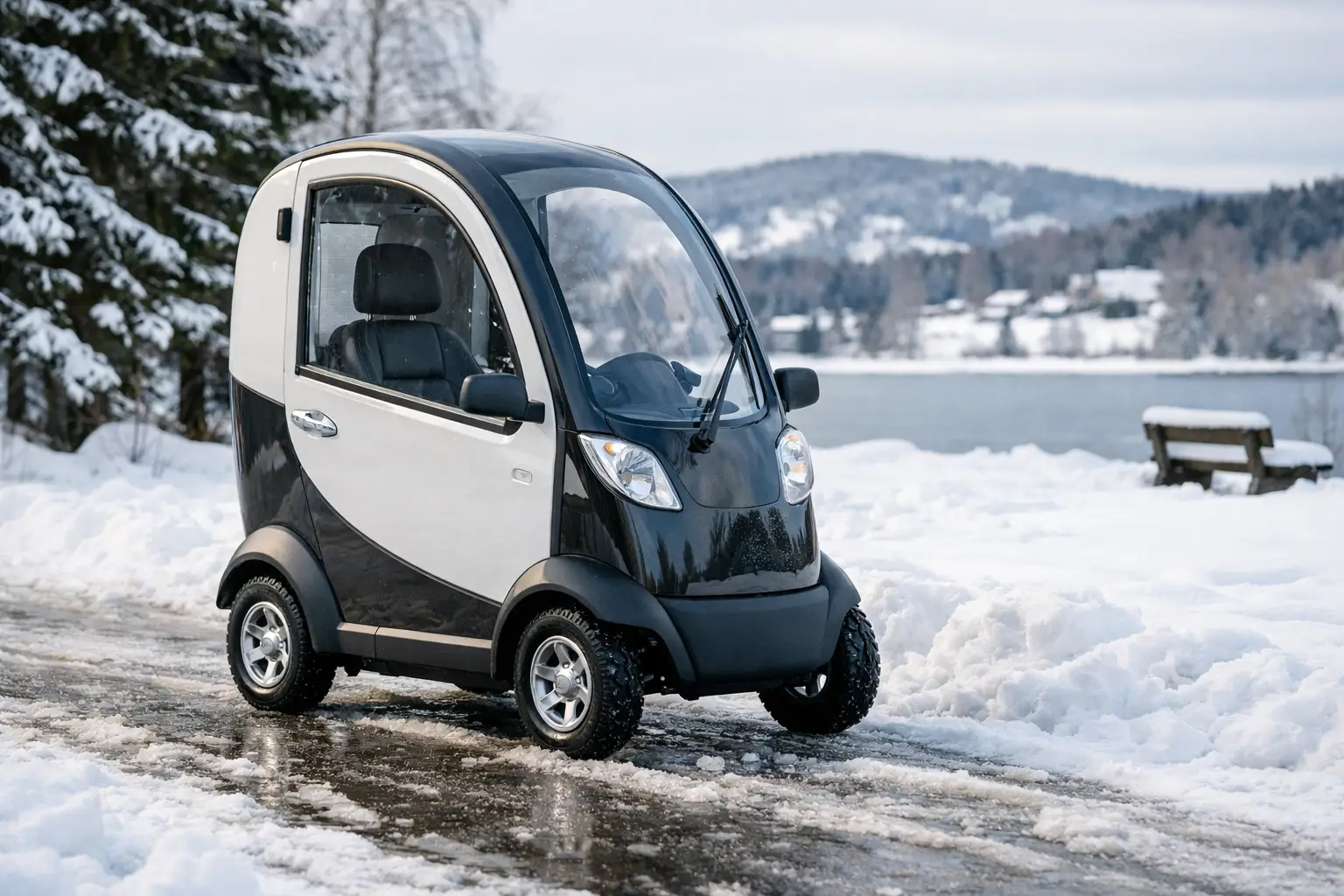
An enclosed mobility scooter has a built-in cabin around the seating area, usually with doors, clear side panels and a windscreen. Some models include practical comforts such as a heater, windscreen wiper, lighting, ventilation and a demister. The result is closer to a small personal vehicle than a typical pavement scooter.
The obvious advantage is weather protection. Your clothes, shopping and controls are better shielded from rain, wind and splashes from wet roads. A proper cabin can also reduce the chill that makes an open journey uncomfortable, even when you are wearing a warm coat and gloves.
That said, an enclosure does not make every winter journey suitable. Ice, snow, standing water and poor visibility still present real risks. The cabin improves comfort and protection from the elements, but safe judgement remains essential.
Why enclosed mobility scooters for winter can help
Winter can be particularly difficult for people with reduced mobility. Waiting for a lift, relying on someone else for errands or staying indoors for days at a time can affect confidence as well as independence. An enclosed scooter can provide a more realistic way to continue travelling locally through the colder months.
The cabin helps you stay warmer, but it also cuts down on wind noise and rain striking your face. For someone living with arthritis, chronic pain, circulation concerns or limited stamina, that extra comfort can make the difference between using the scooter regularly and leaving it parked.
There is a practical benefit for carers and family members too. If a relative relies on a scooter for essential journeys, an enclosed model can offer reassurance that they are less exposed to sudden showers and cold winds. It will not remove the need for sensible planning, but it can make regular local travel more manageable.
Better protection for you and your belongings
A covered cabin gives more than a dry seat. It can help protect shopping bags, a walking stick, a handbag or medical essentials carried in the scooter. Clear windows also provide an enclosed space without making the journey feel isolated from the surroundings.
However, check the entry arrangement carefully. Some cabins have doors that open wide, while others require a little more room at the side of the scooter. If you use a walking aid, have reduced balance or find twisting difficult, easy access matters as much as the weather protection.
A more comfortable longer journey
Enclosed models are often chosen by people travelling further around their town or village. They tend to have supportive seating, suspension and a stronger build than lightweight travel scooters. These features can make uneven pavements and longer routes more comfortable, though they also make the scooter less convenient to transport by car.
If your usual journey involves a mile or two in changeable weather, a well-equipped cabin scooter may be far more suitable than adding a rain cover to a compact model. If you only need a short trip from the car park to the supermarket, a lighter scooter and suitable waterproof clothing could be the more sensible and affordable option.
Check the practicalities before choosing a cabin scooter
An enclosed scooter needs more planning than an ordinary folding or car-boot model. Before you focus on colours or extra features, measure the route it must take every day: the gate, path, garage door, shed entrance and any tight corners. Include enough room to get on and off comfortably.
Storage is often the deciding factor. A cabin scooter needs a dry, secure place with access to a suitable charging point. Leaving it outside can expose the vehicle to damp, frost and avoidable wear, while bringing a large model through a narrow hallway may not be realistic. A garage, secure outbuilding or purpose-built covered space is usually the best arrangement.
Think about charging as part of the purchase, not an afterthought. Batteries can lose efficiency in cold weather, so winter range may be lower than the figure quoted for ideal conditions. Charge the scooter according to its manual, keep the batteries maintained and avoid letting the charge run very low before a planned journey.
Range is not just a number
A scooter may have enough stated range for your route in summer, yet feel less forgiving during winter. Cold temperatures, hills, heavier clothing, wet surfaces, lights, a heater and frequent stops can all use more power. Build in a comfortable margin rather than choosing a model that only just covers the distance.
Consider your real journeys: visiting friends, collecting prescriptions, going to the post office or travelling to the high street. It is wise to allow enough battery capacity to return home without anxiety if the weather worsens or you need to take a longer route.
Road and pavement use
Many enclosed scooters are road-capable Class 3 models. These can generally travel at up to 8 mph on the road and 4 mph on pavements, but the rules around registration, lighting, speed settings and permitted routes need to be understood before use.
A road-capable scooter is not automatically right for every road. Busy roundabouts, fast traffic, narrow lanes and poor winter visibility can be intimidating or unsafe. Plan familiar routes with suitable crossings and, where available, use pavements at the correct reduced speed. Check current UK requirements and the manufacturer guidance for the individual scooter before travelling.
Features that earn their place in winter
A heater can be welcome, especially for users who feel the cold quickly, but it also draws on the battery. It is best viewed as a comfort feature alongside good clothing, rather than a reason to travel in dangerous conditions. A windscreen wiper and washer system may be equally valuable when rain or road spray affects visibility.
Good lights, indicators, reflective details and mirrors are especially useful during darker afternoons. Ensure you can operate every control comfortably while wearing gloves. Test the seat adjustment, tiller position and door handles too. A feature is only helpful if it is easy for you to use independently.
Ventilation deserves attention. A sealed cabin can become misty when warm air meets a cold screen. Look for effective airflow, demisting options and windows that give a clear view around the scooter. Before setting off, clean the windscreen and lights, and do not travel if your vision is obstructed.
A comfortable, adjustable seat and effective suspension are worth prioritising over cosmetic extras. Winter layers can change how you sit, and a seat that feels fine for five minutes may not be supportive on a longer trip. If you are near the scooter’s maximum user weight, choose a model with suitable capacity rather than treating the stated limit as a target.
When an enclosed model may not be the best fit
There are good reasons to choose an open scooter instead. Enclosed scooters are commonly more expensive, bulkier and harder to store. They are not designed to be lifted into a car boot, and their size may make narrow pavements, small gardens or compact sheltered housing difficult to navigate.
They also need regular care. Keep the windows clean, check the door catches and seals, inspect tyres and lights, and arrange servicing when recommended. A cabin does not prevent moisture-related issues if the scooter is stored in a damp place or used without routine checks.
For some users, a pavement scooter with a fitted canopy, leg cover and waterproof accessories offers enough protection at a lower cost. This approach may suit short local trips, provided the scooter remains stable, visibility is clear and the accessories are correctly fitted. It is a useful reminder that the best winter scooter is the one that matches your actual routine, not simply the one with the most equipment.
A sensible way to make your choice
Start with your winter journeys, not the product photograph. Consider the distance you need to travel, the surfaces you meet, whether you use roads, your available storage and how often you expect to travel in rain or cold. Then consider the support you need getting on and off, your preferred seating position and the space required for shopping or mobility aids.
At Mobility Scooters UK Ltd, specialist advice can help buyers and carers compare enclosed, pavement and road-capable models without making the decision feel overwhelming. Asking practical questions before ordering can prevent the disappointment of a scooter that is too large for the gate, too heavy for the intended storage space or not suited to the route.
A winter morning does not always need to mean cancelling your plans. With safe routes, suitable storage and a scooter chosen around your daily life, a comfortable enclosed cabin can help keep local independence within reach when the weather is at its least welcoming.