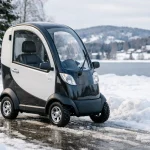


Choosing an All Terrain Mobility Scooter for Grass
A neatly cut lawn can still be difficult ground when walking is painful, balance is uncertain or stamina is limited. An all terrain mobility scooter for grass can make gardens, country paths and outdoor family time feel possible again, but not every larger scooter is equally suited to soft or uneven ground. The right choice depends on the grass itself, the slopes you encounter and how you will use the scooter day to day.
Grass is tougher than it looks
Grass does not offer the even, predictable surface of a pavement. Even a level lawn may hide ruts, tree roots, damp patches and changes in firmness. After rain, tyres can sink into the ground or lose grip, while longer grass creates extra drag that uses more battery power.
That does not mean a scooter must be reserved for tarmac. It means choosing one designed with outdoor capability in mind, then using it with sensible care. A compact boot scooter may manage a dry, short lawn for a brief distance, but it is not the best option for regular trips across a large garden, fields or rough tracks. For that, a heavier-duty all-terrain model is usually the more comfortable and dependable choice.
Before comparing scooters, consider the route you want to travel. Is it a maintained garden path with a strip of lawn between the gate and patio? A gently sloping lawn? Or a longer route around a rural property where grass, gravel and uneven ground are part of everyday life? Being realistic about this makes the decision much clearer.
What makes an all terrain mobility scooter for grass suitable?
A true outdoor scooter is not simply one with a high top speed. The features that matter most on grass are stability, traction, ground clearance, comfortable suspension and sufficient battery capacity.
Larger pneumatic tyres give better grip
Tyres are one of the biggest differences between a pavement-focused scooter and a model intended for varied ground. Larger pneumatic tyres provide more contact with the surface and help absorb small bumps. A deeper tread can also give more confidence on dry grass, gravel and compacted earth.
Pneumatic tyres do need routine checks. Keep them inflated to the manufacturer’s recommended pressure, as under-inflated tyres can make steering feel heavy and affect stability. They can puncture, too, so it is worth asking about replacement tyres and ongoing servicing when purchasing.
Suspension supports a smoother ride
Good suspension does not turn a muddy field into easy ground, but it can make an enormous difference over uneven lawns, paving edges and rough paths. Front and rear suspension reduces the jarring feeling that can travel through the seat and handlebars.
This matters particularly if you experience back, hip or joint discomfort, or if a rough ride leaves you feeling tired. A well-cushioned, adjustable seat and supportive armrests work alongside suspension to make longer outdoor journeys more enjoyable.
Ground clearance prevents scraping
Ground clearance is the space between the underside of the scooter and the ground. More clearance helps the scooter pass over shallow ruts, small stones and uneven areas without catching underneath. It is especially useful where lawns meet paths, driveways or dropped kerbs.
High ground clearance should be paired with a stable design. A taller scooter can feel less secure if it is taken across a steep side slope, so do not assume that more clearance means it can safely tackle every incline.
Battery range needs a realistic margin
Grass, hills, cold weather and heavier loads all use more battery power than a smooth, level pavement. Treat the published range as a helpful guide rather than a promise for every journey. If you regularly travel across a large garden or rural grounds, choose a scooter with enough range to return home comfortably without running the battery close to empty.
Charging after use, following the supplied charging guidance and storing the scooter appropriately all help protect battery performance. If the scooter is used less during winter, the battery still needs care rather than being left unattended for months.
Match the scooter to your garden and routine
A large, powerful scooter has clear advantages outdoors, but it also brings practical considerations. It needs more storage space, may be harder to transport by car and is usually less convenient for tight indoor areas. The best scooter is the one that works for the whole journey, not just the lawn.
Think about where it will be kept, whether there is a suitable charging point, and how it gets from storage to the garden. A narrow gate, steps, a sharp turn or a steep ramp can limit your options. Measure these areas before ordering, including the width of the gate and any doorways the scooter must pass through.
Your own comfort and support needs are equally important. Check the seat width, legroom, armrest adjustment and handlebar position. If getting on and off is difficult, a swivel seat may be particularly helpful. Make sure the scooter’s user weight capacity allows for the rider, outdoor clothing and any belongings carried in a basket or bag.
For many people, a mid-to-large pavement or road-capable scooter offers the best balance. It can cope with maintained grass and uneven paths while still being useful for local shops, appointments and visits. A more specialist all-terrain scooter may be better where the terrain is regularly rough, the property is extensive or reliable outdoor performance is the main priority.
Use grass safely and with confidence
Even the right scooter has limits. Wet, muddy or frozen grass can quickly become unsafe, especially on a slope. If wheels begin to spin, the ground feels soft or the scooter is leaning, stop rather than trying to power through. Turning sharply can also damage the lawn and reduce grip.
When travelling on grass, keep a low, steady speed and take the most level route available. Approach small changes in level head-on where possible, rather than at an angle. Avoid travelling across the face of a slope, as this can make any mobility scooter feel unstable. Never rely on speed to carry you over a difficult patch.
Take extra care around hidden hazards. Long grass can conceal holes, hosepipes, toys, stones and animal-made dips in the ground. Walking the intended route first, or asking a family member or carer to inspect it, is a simple precaution that can prevent a difficult situation.
If your journey includes public pavements or roads as well as private land, choose the correct scooter category for that use and understand the rules that apply. The controls, lights, indicators and mirrors on a larger model can be useful beyond the garden, but safe operation and regular maintenance remain essential.
Questions worth asking before you buy
A scooter description can tell you the size of the battery and the maximum speed, but a specialist conversation can help translate specifications into everyday suitability. Tell the adviser about the surface, gradients, gates, storage space, your height and weight, and whether you need to lift or transport the scooter.
It is also sensible to ask about delivery arrangements, warranty cover, servicing and the availability of batteries, chargers and replacement parts. A mobility scooter is a long-term aid to independence, so dependable support after delivery matters as much as making the initial choice.
Mobility Scooters UK Ltd offers a choice of established mobility brands, helping customers and carers compare practical options rather than being pushed towards one type of scooter. Clear advice can be especially reassuring for a first-time buyer who is unsure whether they need a compact pavement scooter or a more capable outdoor model.
A well-chosen scooter should let you enjoy the garden, not worry about every uneven patch of ground. Start with the routes that matter most to you, allow for the British weather and choose comfort, stability and support that will still serve you well after the first sunny afternoon.