


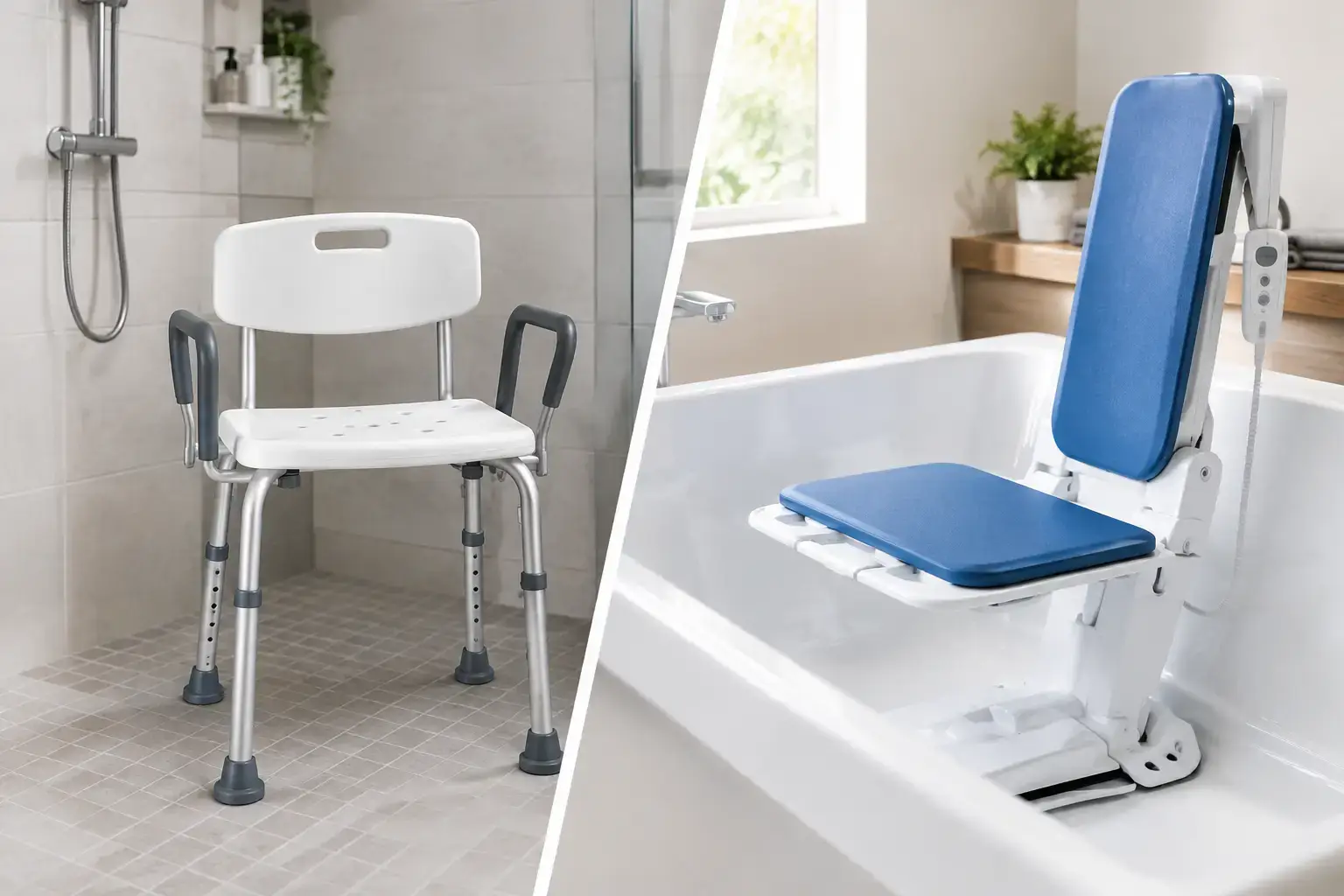
Shower Chair Versus Bath Lift – Which Is Best?
A difficult transfer in a wet bathroom can turn a relaxing wash into the most tiring part of the day. When comparing a shower chair versus bath lift, the right choice is not simply about price or appearance. It comes down to how you wash now, how safely you can move between surfaces, and which option lets you feel more independent at home.
A shower chair provides a stable seat while you shower. A bath lift lowers and raises you in and out of an existing bath, allowing you to continue bathing in warm water. Both can make personal care safer and more comfortable, but they solve different problems. Understanding that difference can help you, a relative or a carer choose with confidence.
Shower chair versus bath lift: the key difference
The simplest question is whether you prefer a shower or a bath. If you already have a level-access shower, wet room or shower over a bath and can step into the showering area safely, a shower chair may be the practical answer. You sit at a comfortable height rather than standing for the whole wash, which can reduce fatigue and lower the risk of slipping.
A bath lift is designed for someone who still enjoys a bath but struggles to lower themselves to the bottom or get back up afterwards. The lift sits inside the bath. You transfer onto the raised seat at bath-edge height, then use a hand control to lower gently into the water. When you have finished, it raises you again for a safer exit.
Neither product automatically replaces the other. A shower chair does not provide an immersed bath, and a bath lift does not make a shower cubicle accessible. Start with your normal bathing routine rather than choosing the equipment first.
When a shower chair is likely to suit you
A shower chair is often a good choice for people who can manage a short transfer from wheelchair, walking frame or standing position onto a seat. It can be particularly helpful if standing causes pain, breathlessness, dizziness or unsteadiness.
Many people choose a shower chair after a change in mobility, such as recovery from surgery, arthritis becoming more limiting, or reduced balance. Sitting down can make washing your hair and lower legs less demanding, while leaving you with more energy for the rest of the day.
The bathroom layout matters. A basic shower chair needs a suitable shower area and enough room for you to turn, transfer and use it safely. Some chairs have a backrest and armrests for greater support. Others are compact and lighter to move, which can suit a smaller cubicle but may offer less help when sitting down or standing up.
If a person cannot safely step over the side of a bath to reach an over-bath shower, a standard shower chair alone may not be enough. In that situation, adapting the bathroom or considering a shower and commode wheelchair may be more appropriate. The safest solution is always the one that removes the risky part of the transfer, not one that asks you to work around it.
Benefits of shower chairs
For many homes, a shower chair is the more straightforward and affordable starting point. It does not need charging, and it can usually be cleaned easily after use. It is also useful for households where more than one person uses the shower, provided it can be positioned and adjusted safely.
A chair can support independence, but it can also make assisted washing easier for a carer. The user is seated at a more secure height, rather than trying to stay balanced on wet feet. For some people, that added reassurance is reason enough to make the change.
There are trade-offs. A shower chair will not help if the main difficulty is entering the shower area. It also needs a non-slip, level surface and correctly adjusted feet. Avoid using a domestic stool, garden chair or plastic seat not intended for shower use, as these may become unstable or deteriorate in wet conditions.
When a bath lift may be the better option
A bath lift can be an excellent choice when a bath is already part of someone’s routine and bathing brings comfort for aching joints, muscles or simply relaxation. It removes the hardest movement: lowering down to the base of the bath and pushing back up from a low position.
Most battery-operated bath lifts are controlled by a simple waterproof handset. The seat begins at the top of the bath so that you can transfer across, then lowers slowly. Many models recline once near the bottom, helping you relax in the water while retaining support behind your back.
This option is often suitable for people with enough upper-body control to transfer sideways onto the seat, or for those who have appropriate help from a carer. Some bath lifts have side flaps that bridge the gap between the seat and bath edge, making the transfer smoother. The exact bath shape, internal length and user weight capacity must be checked before buying.
Benefits and limitations of bath lifts
The major benefit is being able to keep enjoying a proper bath without a costly bathroom renovation. A bath lift can offer more dignity and choice than giving up a familiar routine because getting up has become difficult.
However, it is not a fit for every bath or every level of mobility. A person must still get over the bath edge to reach the raised seat. If that step is unsafe, painful or impossible, a bath lift may not reduce the main risk. It also needs charging and regular checks, and the bath must have enough space for the lift to operate properly.
A bath lift raises you to the bath edge, not onto the floor or into a wheelchair. Think carefully about what happens next. Is there a grab rail in the right place? Is there room for a carer if assistance is needed? Can the user make the transfer without twisting, reaching too far or putting too much weight through weak legs or arms?
Safety and comfort checks before you choose
Good bathing equipment should fit the person, the bathroom and the support available at home. Measurements matter, but so does everyday use. A product that looks ideal on paper may be difficult to manage in a narrow bathroom or uncomfortable for someone with limited hip movement.
Before choosing either option, consider the height of the user, their weight, whether they need back or arm support, and how they transfer. Think through the full sequence from entering the bathroom to drying and dressing afterwards. This often highlights a problem that is easy to miss when focusing only on the bath or shower itself.
For a shower chair, measure the shower floor area, doorway or screen opening, and available turning space. Check whether the chair can be placed level and whether it blocks access to the controls. For a bath lift, measure the bath’s internal width and length, the height of the sides, and the surrounding floor space needed for transfer.
If someone has had recent surgery, has frequent falls, significant weakness on one side, or needs hands-on help with transfers, advice from an occupational therapist can be especially valuable. They can assess the person in their own bathroom and recommend changes that reflect their particular needs.
Cost, upkeep and day-to-day practicality
A shower chair generally costs less than a powered bath lift and has fewer parts to maintain. It may be the sensible choice for a temporary recovery period or for a household with a suitable accessible shower. Keep it clean, check the feet regularly and replace it if there are signs of damage, instability or corrosion.
A bath lift is a larger investment, but it may be worthwhile when it allows someone to continue a valued daily routine independently. Look for a model with a clear weight limit, supportive seating, a reliable handset and a battery system that is easy to charge. Follow the manufacturer’s instructions for cleaning, storage and charging rather than leaving the equipment until it fails.
Price should not be the only deciding factor. The cheapest option is poor value if it does not make the transfer safer. Equally, the most feature-rich model is unnecessary if a simple, stable shower chair meets the user’s needs comfortably.
Making the right choice for your home
Choose a shower chair if you have safe access to a showering area, need support while washing, and value a simple seat that reduces standing time. Choose a bath lift if getting into the bottom of the bath and rising again is the main challenge, and you can still transfer safely over the bath edge onto a raised seat.
Some households eventually need a different solution altogether, particularly where wheelchair transfers, carer support or very limited standing ability are involved. There is no failure in changing equipment as your needs change. The aim is to keep washing comfortable, private and safe rather than persevering with a setup that no longer works.
Taking a few careful measurements and being honest about the hardest part of your current routine can make the decision much clearer. The best bathing aid is the one that helps you start the day, or settle into the evening, with less effort and greater confidence.